

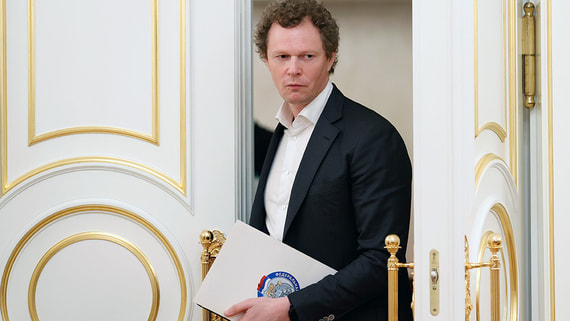
The Russian Federal Tax Service (FNS) is embarking on an ambitious collaborative project with major corporations aimed at bringing transparency and legitimacy to the country’s staffing and personnel leasing market. This groundbreaking initiative, details of which have recently emerged, represents a significant step toward addressing long-standing concerns about tax evasion, worker exploitation, and unfair competition in the temporary employment sector. The experiment brings together government regulators and leading business entities in an unprecedented effort to establish clear rules and eliminate shadow practices that have plagued the industry for years.
Key Points
- The Russian Federal Tax Service is partnering with major corporations to create a voluntary compliance framework and ‘white list’ of legitimate staffing providers.
- Shadow staffing practices including wage underreporting and worker misclassification cost Russia billions of rubles annually in lost tax revenue and social contributions.
- Compliant companies may receive reduced audit scrutiny, faster administrative processes, and preferential access to state contracts.
- Digital monitoring tools and automated reporting systems will be central to tracking compliance across the fragmented staffing market.
- The experiment will run for a defined period before potential conversion into permanent nationwide regulatory frameworks.
How the FNS-Business Partnership Will Work
The new experimental program focuses on creating a transparent framework for companies that provide outsourced personnel services to other businesses. Under the current system, numerous intermediary firms operate in legal gray zones, often underreporting wages, evading social contributions, and exploiting workers through complex employment schemes. The FNS initiative aims to develop monitoring mechanisms and voluntary compliance standards that participating companies will adopt, essentially creating a “white list” of legitimate staffing providers. Major Russian corporations have expressed willingness to participate, recognizing that a cleaner market benefits all stakeholders in the long term.
The staffing industry in Russia has grown substantially over the past two decades, with companies increasingly turning to external providers for temporary workers, specialized professionals, and seasonal labor. This growth, however, has been accompanied by the proliferation of firms that minimize tax obligations through various schemes, including artificially splitting businesses, misclassifying workers as independent contractors, or registering employees at minimum wage while paying the remainder under the table. Industry experts estimate that such practices cost the Russian budget billions of rubles annually in lost tax revenue and social insurance contributions.
From Punitive Enforcement to Collaborative Compliance
Russia’s approach to regulating the staffing industry has evolved significantly since the early 2000s. Initial attempts to address outstaffing and personnel leasing came with amendments to the Labor Code in 2014 and 2016, which placed restrictions on temporary employment agencies and required their accreditation. However, enforcement proved challenging, and many operators continued to find workarounds. The current initiative represents a shift from purely punitive measures toward collaborative compliance, drawing on successful experiences from other sectors where partnerships between tax authorities and industry leaders have yielded positive results. The FNS has increasingly adopted this cooperative approach, recognizing that sustainable compliance often requires industry buy-in rather than solely relying on audits and penalties.
The economic rationale for legitimizing the staffing market extends beyond simple tax collection. When companies operate in the shadow economy, legitimate businesses face unfair competition from those with artificially lower labor costs. This creates a race to the bottom that ultimately harms workers, who lose social protections and pension contributions. The current experiment seeks to address these systemic issues by making compliance economically advantageous. Participating companies may receive benefits such as reduced audit scrutiny, faster administrative procedures, and positive reputation effects that help them win contracts with state-owned enterprises and responsible corporate clients.
Corporate Support and Practical Obstacles Ahead
Major Russian employers have generally welcomed the initiative, viewing it as an opportunity to level the playing field. Large corporations that already maintain strict compliance standards have long complained about losing contracts to less scrupulous competitors offering lower prices based on tax optimization schemes. However, implementation presents significant challenges. The staffing market includes thousands of small and medium-sized operators, and achieving meaningful coverage will require extensive outreach and potentially the development of technological solutions for monitoring compliance. The FNS has indicated that digital tools, including data analytics and automated reporting systems, will play a central role in the experiment.
The success of this initiative will likely depend on several factors, including the balance between incentives and enforcement, the clarity of compliance criteria, and the willingness of mid-market players to participate. Some industry observers have expressed concern that overly burdensome requirements could simply drive smaller operators further underground rather than bringing them into compliance. The FNS and its business partners will need to carefully calibrate the program to avoid unintended consequences while achieving meaningful progress toward market transparency. The experiment is expected to run for a defined period, after which results will be evaluated and potentially scaled into permanent regulatory frameworks.
What This Means for Russian Labor Markets
This initiative marks a notable pivot in how Russian regulators approach shadow economy problems. Rather than relying solely on audits and penalties that have proven ineffective since the 2014-2016 Labor Code amendments, the FNS is betting that economic incentives can achieve what enforcement alone could not. The strategy essentially creates a two-tier market where legitimate operators gain tangible competitive advantages.
The real test will come with mid-sized staffing firms that currently straddle legal gray zones. Large corporations already operating transparently have clear incentives to participate, but the thousands of smaller operators face a genuine calculation: join and absorb higher compliance costs, or risk being shut out of contracts with major clients and state enterprises entirely.
If the experiment succeeds, expect the model to spread to other sectors plagued by informal employment practices. Construction, agriculture, and retail logistics all face similar challenges with labor cost arbitrage through shadow schemes. However, overly rigid requirements could backfire by pushing marginal operators deeper underground rather than into compliance.
Common Questions
Why is Russia's staffing industry considered a shadow economy problem?
Many staffing intermediaries minimize tax obligations by underreporting wages, misclassifying workers as independent contractors, or paying portions of salaries off the books. This costs the government significant tax revenue while denying workers social protections and pension contributions they are legally entitled to receive.
What benefits do companies receive for joining the FNS compliance program?
Participating firms may receive reduced audit scrutiny from tax authorities, faster administrative processing, and reputational advantages when competing for contracts with state-owned enterprises and corporate clients that prioritize working with compliant partners.
How will the FNS monitor compliance in the staffing industry?
The tax service plans to deploy digital tools including data analytics platforms and automated reporting systems to track whether participating companies are meeting compliance standards. This technological approach aims to scale oversight across a market with thousands of operators.
Expert Opinion: This collaborative approach between the FNS and major corporations signals a maturation of Russian regulatory strategy, moving away from adversarial enforcement toward partnership-based compliance. If successful, this model could be replicated across other sectors facing similar shadow economy challenges. The key metric to watch will be whether medium-sized staffing firms voluntarily join the program once they see competitive advantages for early participants in the legitimate market segment.