

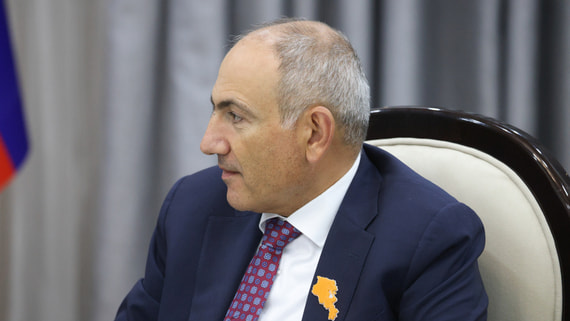
Armenian Prime Minister Nikol Pashinyan has made his first appearance at the Eurasian Economic Union (EAEU) council meeting in over eighteen months, marking a significant moment in the country’s complex relationship with the Russia-led economic bloc. This return to the regional diplomatic table comes amid ongoing tensions and shifting geopolitical alignments in the South Caucasus region, raising questions about Armenia’s future orientation between East and West.
The Prime Minister’s prolonged absence from EAEU summits had been widely interpreted as a sign of cooling relations between Yerevan and Moscow, particularly following the 2020 Nagorno-Karabakh war and subsequent territorial losses to Azerbaijan. Armenia’s dissatisfaction with what it perceived as insufficient Russian support during the conflict has been a recurring theme in Pashinyan’s foreign policy rhetoric over the past several years.
Armenia’s Complex Relationship with the Eurasian Economic Union
Armenia joined the Eurasian Economic Union in 2015 under Pashinyan’s predecessor, becoming a full member of the economic integration project that also includes Russia, Belarus, Kazakhstan, and Kyrgyzstan. The bloc was designed to facilitate the free movement of goods, services, capital, and labor among member states, with Russia serving as its dominant economic and political force. For Armenia, a landlocked nation with closed borders with two of its four neighbors (Turkey and Azerbaijan), membership in the EAEU has provided crucial economic lifelines and market access.
However, the relationship has been far from smooth under Pashinyan’s leadership, which began following the 2018 Velvet Revolution that brought the former journalist to power on a wave of anti-corruption and pro-democracy sentiment. While Pashinyan initially maintained Armenia’s commitment to the EAEU and the Collective Security Treaty Organization (CSTO), his government has increasingly questioned the benefits of these Russian-led alliances, particularly in the security sphere. Armenia has frozen its participation in CSTO activities, citing the organization’s failure to respond to what Yerevan characterized as Azerbaijani aggression on Armenian sovereign territory.
Economic Dependencies and Strategic Calculations
Despite political tensions, Armenia’s economic ties with EAEU member states remain substantial. Russia continues to be Armenia’s largest trading partner, and the country relies heavily on Russian energy supplies, including natural gas delivered at preferential prices. Remittances from the large Armenian diaspora working in Russia constitute a significant portion of the national income, making any dramatic break from the economic bloc a potentially costly endeavor. Armenian exports, including agricultural products, textiles, and minerals, benefit from duty-free access to the vast Russian market.
Analysts suggest that Pashinyan’s return to the EAEU council table reflects a pragmatic recognition of these economic realities, even as Armenia simultaneously pursues closer ties with the European Union and the United States. The government in Yerevan has been careful to frame its Western outreach not as a replacement for existing partnerships but as a diversification strategy aimed at reducing dependency on any single power. This balancing act has become increasingly difficult to maintain as great power competition intensifies in the region.
Looking Ahead: Armenia’s Multi-Vector Foreign Policy
Pashinyan’s participation in the latest EAEU summit signals that Armenia is not yet ready to completely sever ties with the Russian-led economic architecture, despite mounting domestic and international pressure to choose sides. The Prime Minister has consistently argued that Armenia must pursue a multi-vector foreign policy that serves national interests rather than ideological alignment. Critics, however, contend that such an approach becomes untenable when the interests of different partners fundamentally conflict.
The coming months will likely prove decisive for Armenia’s geopolitical orientation. Ongoing peace negotiations with Azerbaijan, the question of Russian military presence on Armenian territory, and potential EU integration pathways all represent critical junctures. Pashinyan’s government faces the challenging task of maintaining economic stability while navigating an increasingly polarized international environment where traditional alliances are being tested and new partnerships are being forged.
Expert Opinion: Pashinyan’s return to the EAEU summit appears to be a calculated move to preserve economic benefits while Armenia explores alternative partnerships. This dual-track approach may buy time, but Yerevan will eventually face pressure to make more definitive choices as regional dynamics continue to evolve. The key variable remains whether Russia will accept Armenia’s diversification efforts or demand exclusive loyalty as the price of continued partnership.