

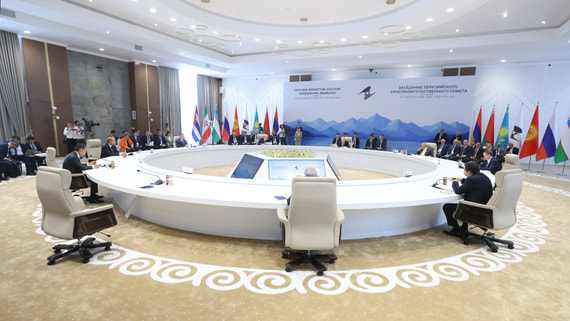
Russia’s Ministry of Economic Development has announced ambitious plans to synchronize electronic commerce legislation across all member states of the Eurasian Economic Union (EAEU). The initiative signals a significant step toward creating a unified digital marketplace spanning multiple former Soviet republics, with officials indicating that adjustments to Russian domestic law may be necessary to achieve full harmonization. This development comes as cross-border e-commerce continues to grow rapidly throughout the region, creating both opportunities and regulatory challenges for governments seeking to protect consumers while fostering economic growth.
The Eurasian Economic Union: A Growing Digital Marketplace
The Eurasian Economic Union, established in 2015, currently comprises five member states: Russia, Belarus, Kazakhstan, Armenia, and Kyrgyzstan. Together, these nations represent a combined market of approximately 185 million consumers and a collective GDP exceeding $2 trillion. The bloc was created to ensure free movement of goods, services, capital, and labor among member states, building upon earlier integration efforts that began with the Customs Union in 2010. However, the digital economy has evolved rapidly since the union’s founding, creating regulatory gaps that officials now seek to address through comprehensive legislative alignment.
E-commerce in the EAEU region has experienced explosive growth, particularly following the COVID-19 pandemic, which accelerated digital adoption across all member states. Russian online retail sales alone exceeded 5 trillion rubles in 2023, while Kazakhstan and Belarus have seen double-digit annual growth in their digital commerce sectors. This expansion has highlighted the need for consistent consumer protection standards, unified dispute resolution mechanisms, and harmonized regulations governing cross-border transactions within the economic bloc.
Key Areas of Legislative Harmonization
The synchronization effort is expected to address several critical areas of e-commerce regulation. These include standardized consumer protection frameworks, unified requirements for online marketplace operators, consistent rules for digital contracts and electronic signatures, and harmonized approaches to data protection and privacy. Additionally, the initiative will likely tackle issues related to taxation of digital services, customs procedures for cross-border parcels, and liability standards for platform operators regarding counterfeit or dangerous goods sold through their services.
Russian officials have acknowledged that achieving true harmonization may require amendments to existing domestic legislation. This willingness to modify Russian law represents a notable commitment to the integration project, as the country’s economy dominates the union, accounting for roughly 85% of the bloc’s total GDP. Historically, smaller member states have often adapted their regulations to match Russian standards, making this flexibility on Moscow’s part particularly significant for the cooperative nature of the initiative.
Implications for Businesses and Consumers
For businesses operating within the EAEU, legislative harmonization promises to reduce compliance costs and administrative burdens associated with navigating different regulatory regimes across member states. Companies will potentially be able to operate under a single set of rules throughout the bloc, simplifying expansion strategies and supply chain management. Small and medium enterprises, which often lack resources to navigate complex multi-jurisdictional requirements, stand to benefit significantly from streamlined regulations.
Consumers across the union can expect enhanced protections and more consistent shopping experiences when purchasing from vendors in other member states. Standardized return policies, unified warranty requirements, and consistent dispute resolution procedures would provide greater confidence in cross-border transactions. The initiative also aims to address concerns about consumer data protection, ensuring that personal information receives comparable safeguards regardless of where an online retailer is based within the economic union.
Challenges and Timeline Ahead
Despite the ambitious goals, significant challenges remain in achieving full legislative synchronization. Each member state has developed its e-commerce sector under different conditions, with varying levels of digital infrastructure, consumer expectations, and regulatory traditions. Balancing the interests of all parties while maintaining the flexibility needed for national circumstances will require careful negotiation and compromise. The Ministry of Economic Development has not yet announced a specific timeline for implementation, though observers expect the process to unfold over several years as technical working groups develop detailed proposals for consideration by member state parliaments.
Expert Opinion: The EAEU’s move toward e-commerce harmonization reflects a broader global trend of regional blocs seeking to establish unified digital marketplaces. Success will depend heavily on Russia’s willingness to genuinely compromise rather than simply impose its standards on smaller partners. If implemented effectively, this initiative could serve as a model for digital trade integration among emerging economies and significantly boost intra-regional commerce by reducing friction for both businesses and consumers.