

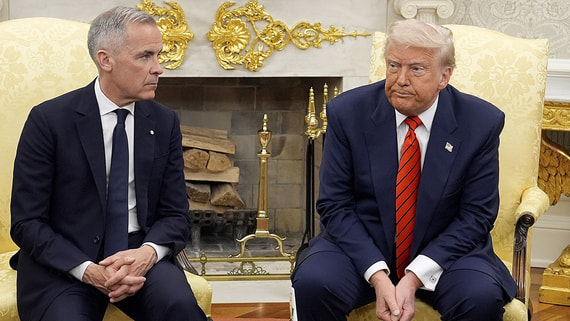
Former President Donald Trump has reignited trade tensions with Canada, signaling his unwillingness to abandon tariff-based economic policies despite mounting evidence that such conflicts negatively impact his approval ratings. The decision to escalate commercial disputes with America’s largest trading partner represents a continuation of Trump’s protectionist economic philosophy, one that prioritizes reshoring manufacturing and reducing trade deficits over maintaining traditional alliances. As the political and economic ramifications of this strategy unfold, analysts are questioning whether the short-term political gains justify the potential long-term damage to North American economic integration.
The roots of Trump’s trade confrontation with Canada stretch back to his first administration, when he renegotiated the North American Free Trade Agreement (NAFTA) into the United States-Mexico-Canada Agreement (USMCA). During those negotiations, Trump frequently characterized Canada as taking advantage of American workers and businesses, particularly in sectors like dairy, lumber, and aluminum. The current escalation appears to build upon these grievances, with new tariffs targeting Canadian goods despite the existence of the very trade agreement his administration championed as a major victory.
Historical Context of US-Canada Trade Relations
The United States and Canada share the world’s longest undefended border and one of the most comprehensive trading relationships on the planet. Bilateral trade between the two nations exceeds $700 billion annually, with millions of jobs on both sides depending on the free flow of goods and services. Historically, this relationship has been characterized by cooperation and mutual benefit, with supply chains deeply integrated across industries ranging from automotive manufacturing to energy production. The automotive sector alone sees parts crossing the border multiple times during the production of a single vehicle, making tariffs particularly disruptive to established manufacturing processes.
Trade tensions between the two neighbors, while not unprecedented, have traditionally been resolved through diplomatic channels and established dispute resolution mechanisms. The softwood lumber dispute, for instance, has persisted for decades but has generally been managed without escalating into broader trade conflicts. Trump’s approach represents a significant departure from this tradition, using tariffs not merely as protective measures but as negotiating leverage across unrelated policy areas, including immigration and drug enforcement.
Economic Impact and Market Reactions
The economic consequences of renewed trade hostilities are already becoming apparent. American consumers face higher prices on Canadian imports, including energy products, agricultural goods, and manufactured items. Canadian officials have indicated their willingness to implement retaliatory measures, potentially targeting American exports in politically sensitive regions. Economic analysts warn that a prolonged trade war could shave significant points off GDP growth in both countries while accelerating inflation at a time when central banks are working to achieve price stability.
Small and medium-sized businesses, which often lack the resources to absorb tariff costs or restructure supply chains, are particularly vulnerable to trade disruptions. Many American companies that source materials or components from Canada have expressed concern about their ability to remain competitive if tariffs persist. The agricultural sector, already facing challenges from climate variability and shifting global markets, could see Canadian retaliatory tariffs further constrain export opportunities.
Political Calculations Behind the Strategy
Despite polling data suggesting that trade wars are unpopular with significant segments of the American electorate, Trump appears committed to this approach as a central element of his economic messaging. Supporters argue that tariffs protect American jobs and force trading partners to negotiate more favorable terms. Critics counter that the costs are ultimately borne by American consumers and businesses, with any benefits concentrated in specific sectors while harm is distributed broadly across the economy. The political calculation seems to rest on the assumption that demonstrating toughness on trade resonates with key voter demographics, particularly in manufacturing regions that have experienced decades of industrial decline.
Historical precedent offers mixed lessons about the effectiveness of tariff-based trade policies. The Smoot-Hawley Tariff Act of 1930 is widely credited with deepening the Great Depression by triggering retaliatory measures from trading partners. More recent examples, including the steel and aluminum tariffs imposed during Trump’s first term, produced limited reshoring of manufacturing while raising costs for downstream industries that use these materials as inputs. Nevertheless, Trump has consistently maintained that previous trade agreements disadvantaged American workers and that aggressive tariff policies are necessary to restore balance.
Expert Opinion: The renewed trade conflict between the United States and Canada represents a fundamental test of North American economic integration built over decades. While tariffs may deliver short-term political benefits by appealing to protectionist sentiments, the long-term consequences for supply chain stability, consumer prices, and allied relationships could prove far more damaging. Expect Canada to respond with targeted countermeasures designed to maximize political pressure while both economies absorb unnecessary friction costs.