

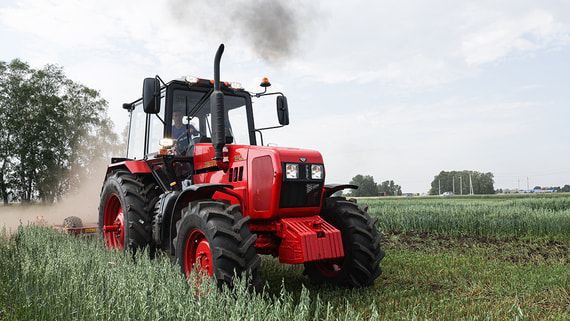
The Minsk Tractor Works (MTZ), one of the largest agricultural machinery manufacturers in the former Soviet space, has announced plans to restructure and potentially reduce its dealer network in the Russian Federation. This strategic decision comes as the Belarusian industrial giant seeks to optimize its sales operations and improve efficiency in what remains its most important export market. Despite these planned changes to its distribution infrastructure, company officials have indicated that the overall structure of export sales is expected to remain stable through the end of the current year, with Russia continuing to serve as the primary destination for MTZ products.
Russia Remains the Cornerstone of MTZ Export Strategy
The Russian Federation has historically been the dominant market for Belarusian tractor exports, accounting for a substantial portion of MTZ’s total international sales. This relationship dates back to Soviet-era industrial planning, when the Minsk Tractor Works was established as a key supplier of agricultural equipment for the entire USSR. Following the dissolution of the Soviet Union, trade ties between Belarus and Russia remained strong, bolstered by various bilateral agreements and the formation of the Union State between the two countries. The preferential trading arrangements and minimal customs barriers have allowed MTZ to maintain its competitive position against both domestic Russian manufacturers and international competitors.
Industry analysts note that the decision to streamline the dealer network does not signal a retreat from the Russian market but rather represents an effort to improve profitability and customer service quality. Over the years, some dealerships may have become redundant or underperforming, and consolidation could help MTZ focus resources on more productive sales channels. The agricultural machinery sector has faced various challenges in recent years, including fluctuating commodity prices, changing farming practices, and increased competition from both Asian manufacturers and Western brands that have expanded their presence in the region.
Historical Significance and Production Capabilities
The Minsk Tractor Works was founded in 1946 and has since grown to become one of the world’s largest tractor manufacturers by volume. The company produces a wide range of agricultural and industrial machinery under the Belarus brand, with annual production capacity exceeding tens of thousands of units. MTZ tractors are known for their durability, ease of maintenance, and suitability for the challenging agricultural conditions found across the post-Soviet region. The company exports to more than 100 countries worldwide, though the Commonwealth of Independent States, particularly Russia, Kazakhstan, and Ukraine, have traditionally been its primary markets.
The restructuring of dealer networks is a common practice in the heavy machinery industry as manufacturers seek to adapt to changing market conditions. Effective dealer networks are crucial for agricultural equipment sales, as they provide not only sales services but also critical after-sales support, spare parts distribution, and technical assistance that farmers depend upon during crucial planting and harvesting seasons. A poorly performing dealer can damage a manufacturer’s reputation and lose customers to competitors, making quality control across distribution networks a constant priority for companies like MTZ.
Market Outlook and Future Prospects
Looking ahead, the agricultural machinery market in Russia presents both opportunities and challenges for MTZ. Russian agricultural production has expanded significantly in recent years, with the country becoming a major global grain exporter. This growth has driven demand for modern farming equipment, creating opportunities for tractor manufacturers. However, MTZ also faces increasing competition from Russian domestic producers who have received government support to expand local manufacturing capacity. Additionally, the broader geopolitical situation and international sanctions regimes have created complex trading environments that affect both supply chains and financing options for agricultural purchases.
Despite these challenges, the fundamental demand drivers for tractors in Russia remain strong. The country’s vast agricultural lands require constant equipment renewal and expansion, and MTZ’s established brand recognition and extensive service infrastructure provide significant competitive advantages. By optimizing its dealer network, MTZ appears to be positioning itself for sustainable long-term growth rather than simply maintaining market share. The company’s leadership understands that efficiency in distribution can be just as important as manufacturing excellence in determining overall business success in competitive international markets.
Expert Opinion: The strategic consolidation of MTZ’s Russian dealer network reflects a broader industry trend toward operational efficiency over geographic expansion. Given the mature nature of the Russia-Belarus agricultural equipment trade relationship, optimizing existing channels rather than expanding them suggests MTZ is prioritizing profit margins and service quality. This approach should strengthen the company’s competitive position against both domestic Russian manufacturers and international entrants seeking to capture market share in one of the world’s largest agricultural economies.