

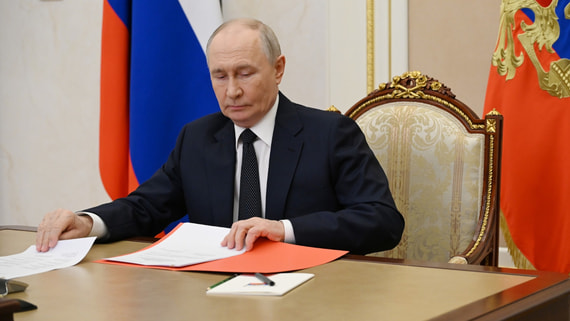
The Kremlin has officially published a series of presidential directives following the conclusion of the St. Petersburg International Economic Forum (SPIEF), with Russian President Vladimir Putin ordering significant improvements to the country’s tax regimes. The instructions, aimed at modernizing Russia’s fiscal framework, come at a critical juncture as the nation navigates complex economic challenges including international sanctions, shifting trade partnerships, and the need to stimulate domestic business growth. These directives signal the government’s intent to create a more competitive and transparent tax environment that could reshape the Russian economic landscape for years to come.
Presidential Directives and Tax Reform Priorities
The presidential orders encompass a broad range of tax-related improvements designed to address longstanding issues within Russia’s fiscal system. Among the key priorities are simplification of tax procedures for small and medium-sized enterprises, optimization of regional tax collection mechanisms, and the introduction of more flexible taxation schemes for strategic industries. The government has been tasked with developing specific proposals within strict deadlines, reflecting the urgency with which the Kremlin views these economic reforms. Finance Ministry officials and tax authorities have already begun preliminary work on implementing these directives, with initial consultations involving business associations and regional administrations underway.
The St. Petersburg International Economic Forum, where these initiatives were initially announced, has long served as Russia’s premier platform for economic policy announcements. This year’s forum attracted thousands of participants from dozens of countries, despite the complex geopolitical environment. Business leaders, government officials, and economic experts used the gathering to discuss investment opportunities, technological development, and the future direction of Russian economic policy. The tax reform announcements were among the most closely watched developments, as they directly impact investment decisions and business planning across multiple sectors of the economy.
Historical Context of Russian Tax Policy Evolution
Russia’s tax system has undergone substantial transformation since the collapse of the Soviet Union in 1991. The country introduced a flat income tax rate of 13 percent in 2001, which was considered revolutionary at the time and helped improve tax compliance significantly. Over the subsequent decades, various adjustments have been made to corporate taxation, value-added tax rates, and special economic zone regulations. However, critics have long argued that the system remains overly complex, with numerous exemptions, special regimes, and regional variations creating uncertainty for businesses. The current reform initiative appears designed to address these structural issues while maintaining fiscal stability during a period of economic transition.
Economic analysts note that tax policy has become increasingly important as Russia seeks to diversify its economy away from heavy reliance on oil and gas revenues. The government has implemented various programs to support manufacturing, technology, and agricultural sectors, with tax incentives playing a central role in these efforts. The new directives are expected to further refine these approaches, potentially introducing more targeted benefits for companies investing in domestic production, research and development, and job creation in economically disadvantaged regions. Such measures could prove crucial in achieving the government’s stated goal of sustainable economic growth independent of commodity price fluctuations.
Implications for Business and Investment Climate
The announced tax improvements could have far-reaching implications for both domestic and international investors operating in Russia. Business associations have generally welcomed the reform direction, expressing hope that simplified procedures will reduce administrative burdens and compliance costs. Particular attention is being paid to proposals affecting digital businesses, startups, and innovative enterprises, as the government seeks to position Russia as a competitive destination for technology investment. Regional authorities are also closely monitoring the developments, as changes to interbudgetary tax distribution could significantly impact local government finances and development capabilities.
Implementation of these reforms will require coordinated action across multiple government agencies, including the Ministry of Finance, Federal Tax Service, Ministry of Economic Development, and regional administrations. The complexity of Russia’s federal structure means that achieving uniform application of new tax provisions across all 89 federal subjects presents significant administrative challenges. Nevertheless, government officials have expressed confidence that the presidential directives provide clear guidance and sufficient authority to overcome bureaucratic obstacles. The success of these reforms will likely be measured not only by their impact on tax revenues but also by improvements in Russia’s international rankings for ease of doing business and investment attractiveness.
Expert Opinion: The timing of these tax reform directives suggests the Kremlin recognizes that fiscal policy modernization is essential for long-term economic resilience amid ongoing geopolitical pressures. Success will depend heavily on implementation quality and the government’s ability to balance revenue needs with genuine business environment improvements. If executed effectively, these reforms could catalyze a new phase of domestic investment growth, though the full impact may not become apparent for two to three years as businesses adjust to the new regulatory framework.