

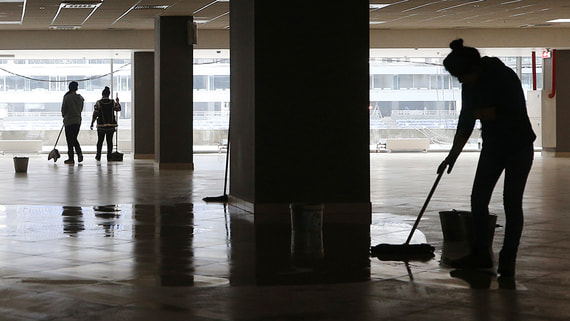
Representatives of Russia’s cleaning industry have put forward a proposal to establish a dedicated tax regime specifically designed for the sector, with the primary goal of bringing businesses out of the shadow economy and into full legal compliance. The initiative suggests implementing a unified tax system similar to the automated simplified taxation system (autoUSN) that has been successfully tested in other sectors of the economy. Industry leaders argue that such measures could dramatically reduce the prevalence of informal employment and undeclared revenues that have long plagued the cleaning services market.
The proposal comes at a time when Russian authorities are intensifying efforts to combat tax evasion and informal labor practices across various industries. The cleaning sector, which employs hundreds of thousands of workers nationwide, has historically been one of the most vulnerable to gray market practices due to its reliance on low-wage labor, high employee turnover, and the prevalence of cash payments. Industry experts estimate that a significant portion of cleaning companies either fully or partially operate in the shadow economy, depriving the state budget of substantial tax revenues.
Understanding the Shadow Economy Problem in Cleaning Services
The cleaning industry faces unique challenges that make it particularly susceptible to informal business practices. Many companies in the sector employ workers without proper contracts, pay wages in cash envelopes, and underreport their actual revenues to minimize tax obligations. This creates an uneven playing field where compliant businesses struggle to compete with those operating outside the legal framework. Workers in such arrangements often lack social protections, health insurance, and pension contributions, leaving them vulnerable in cases of workplace injuries or unemployment.
According to industry analysts, the root causes of this situation include complex tax regulations, high labor costs when all social contributions are factored in, and insufficient enforcement mechanisms. Small cleaning companies, in particular, find it difficult to navigate the existing tax system while remaining competitive on price. The proposed special tax regime would aim to simplify compliance procedures and reduce the overall tax burden to a level that makes legal operation more attractive than shadow activities.
The AutoUSN Model as a Template for Reform
The automated simplified taxation system, or autoUSN, which the cleaning industry proposal references as a potential model, represents one of Russia’s recent innovations in tax administration. Launched as a pilot program in select regions, autoUSN allows small businesses to have their taxes calculated and paid automatically based on transaction data from bank accounts and cash registers. This reduces paperwork, minimizes the risk of calculation errors, and makes tax compliance significantly easier for entrepreneurs with limited accounting resources.
Proponents of applying a similar approach to the cleaning industry argue that it could address several problems simultaneously. Automatic tax calculation would remove the incentive and opportunity for underreporting revenues, while a simplified flat-rate tax could make legal operation more economically viable. The system could also help formalize employment relationships by linking tax benefits to proper worker registration and social contribution payments.
Potential Benefits and Implementation Challenges
If implemented, the proposed tax regime could bring substantial benefits to multiple stakeholders. The government would gain increased tax revenues from a sector that currently contributes less than its economic weight suggests. Workers would receive proper legal protections, including access to healthcare, pensions, and unemployment benefits. Legitimate businesses would be able to compete on equal terms without being undercut by shadow operators, potentially improving service quality across the industry.
However, significant challenges remain in designing and implementing such a system. Authorities would need to determine the appropriate tax rate that balances revenue needs with the goal of encouraging compliance. Enforcement mechanisms would need to be strengthened to ensure that companies actually transition to the new regime rather than continuing informal practices. Additionally, any new tax system would require careful integration with existing regulations governing labor relations, social contributions, and business registration to avoid creating new loopholes or administrative burdens.
Expert Opinion: The cleaning industry’s proposal reflects a growing recognition across Russian business sectors that overly complex tax systems often drive companies toward shadow operations rather than ensuring compliance. If authorities can design a regime that genuinely reduces administrative burden while maintaining adequate revenue collection, this initiative could serve as a model for other labor-intensive service industries facing similar challenges. The success of such reform will ultimately depend on finding the right balance between tax simplification and enforcement capabilities.