

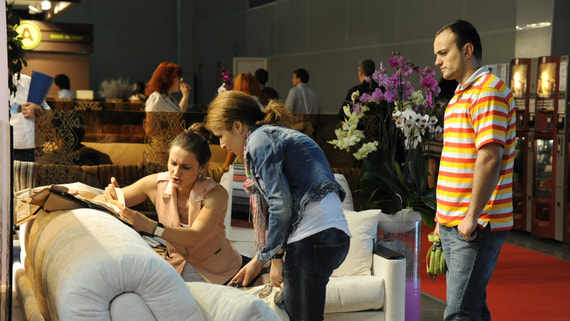
A major Russian furniture manufacturer has announced plans to significantly expand its business operations through an enhanced multi-brand strategy, with particular focus on the premium segment and sleep products. This strategic move comes as the domestic furniture market continues to evolve following the departure of several international brands from the Russian market, creating new opportunities for local manufacturers to fill market gaps and capture consumer demand across various price points and product categories.
Strategic Pivot Toward Premium Market Segments
The company’s decision to strengthen its multi-brand approach reflects broader trends in the Russian furniture industry, where manufacturers are increasingly recognizing the importance of brand diversification to capture different consumer demographics. By expanding into the premium segment, the manufacturer aims to attract affluent customers who previously relied on imported European furniture brands. This segment has shown remarkable resilience despite economic pressures, as higher-income consumers continue to invest in quality home furnishings. Industry analysts suggest that the premium furniture market in Russia has grown by approximately 15-20% since 2022, driven partly by import substitution policies and changing consumer preferences toward domestically produced goods.
The Russian furniture market has undergone significant transformation over the past several years. Before 2022, international brands from Italy, Germany, and Scandinavia dominated the premium segment, accounting for nearly 40% of high-end furniture sales. However, geopolitical developments led to the exit of numerous foreign players, leaving substantial market share available for domestic companies willing to invest in quality improvement and brand development. Russian manufacturers have responded by upgrading production facilities, importing advanced manufacturing equipment, and hiring experienced designers to create products that meet international quality standards.
Sleep Products Emerge as Key Growth Category
The expansion into sleep products represents a particularly strategic move, as this category has demonstrated consistent growth worldwide. The global sleep products market, valued at over $80 billion, has been driven by increasing consumer awareness about the importance of quality sleep for overall health and well-being. In Russia, this trend is equally pronounced, with consumers increasingly willing to invest in premium mattresses, pillows, and bedding accessories. The COVID-19 pandemic accelerated this shift, as people spent more time at home and became more focused on creating comfortable living spaces. Sleep products typically offer higher profit margins compared to traditional furniture items, making them an attractive addition to any furniture manufacturer’s portfolio.
The multi-brand strategy allows the company to position different brands for distinct market segments without creating internal competition or brand confusion. Each brand can develop its own identity, marketing approach, and price positioning while benefiting from shared manufacturing capabilities, supply chain efficiencies, and distribution networks. This approach has proven successful for major international furniture conglomerates and is now being adopted by leading Russian manufacturers seeking to maximize market coverage. Industry experts note that companies employing multi-brand strategies typically achieve 25-30% higher market penetration compared to single-brand competitors.
Market Outlook and Industry Implications
The Russian furniture industry as a whole has shown remarkable adaptability in recent years, with total market volume estimated at approximately 700 billion rubles. Domestic manufacturers now account for over 60% of the market, up from roughly 45% just five years ago. This shift has been supported by government programs promoting import substitution, favorable lending conditions for manufacturing enterprises, and growing consumer trust in Russian-made products. The expansion of multi-brand strategies by major players is expected to further intensify competition, ultimately benefiting consumers through improved product quality, greater variety, and more competitive pricing across all market segments.
Expert Opinion: The Russian furniture market is entering a new phase of maturity where domestic manufacturers are no longer simply replacing foreign brands but are actively innovating and creating distinct value propositions. Companies that successfully execute multi-brand strategies while maintaining quality standards will likely emerge as market leaders within the next 3-5 years, potentially positioning themselves for expansion into neighboring CIS markets where similar import substitution dynamics are at play.