

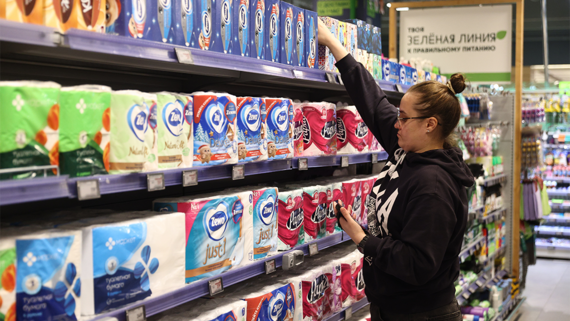
Russia’s consumer price inflation showed signs of deceleration during the second week of July 2024, with prices rising by just 0.17% between July 7 and July 13, according to the latest data from the Federal State Statistics Service (Rosstat). This marks a notable slowdown compared to previous weekly readings and provides some relief amid ongoing concerns about persistent inflationary pressures in the Russian economy. Since the beginning of July, cumulative consumer price growth has reached 0.43%, suggesting that while inflation remains present, its pace may be moderating.
Weekly Inflation Dynamics and Recent Trends
The 0.17% weekly increase represents a meaningful deceleration from the inflation rates observed in recent months. Throughout the first half of 2024, Russia has grappled with stubborn price pressures across multiple sectors of the economy, driven by a combination of factors including labor market tightness, increased government spending, and supply chain disruptions. The Central Bank of Russia has maintained a notably hawkish monetary policy stance, keeping interest rates elevated at 16% to combat inflation that has consistently exceeded the regulator’s 4% annual target.
Economists have been closely monitoring weekly inflation data as a leading indicator of broader price trends. The moderation observed in mid-July could signal that the aggressive monetary tightening measures implemented by the Bank of Russia are beginning to take effect. However, analysts caution that a single week of slower price growth does not necessarily indicate a sustained trend, and seasonal factors may also play a role in the temporary deceleration.
Structural Factors Driving Russian Inflation
Russia’s inflationary environment in 2024 has been shaped by several interconnected factors. The country’s labor market has experienced significant tightness, with unemployment falling to historic lows near 2.6%. This labor shortage has driven wages higher, particularly in manufacturing and defense-related industries, which has translated into increased consumer purchasing power and, consequently, upward pressure on prices. The military-industrial complex expansion has absorbed substantial workforce resources, creating competition for labor across sectors.
Additionally, the ruble’s fluctuations against major currencies have impacted import prices, while domestic production constraints in certain categories have limited supply responses to growing demand. Food prices, which constitute a significant portion of the Russian consumer basket, have been particularly volatile, influenced by agricultural conditions and export restrictions. The government has implemented various measures to stabilize prices on essential goods, including price controls and export duties, with mixed results.
Central Bank Policy Response and Economic Outlook
The Bank of Russia has signaled its readiness to maintain or even tighten monetary policy further if inflation does not show convincing signs of returning to target levels. Governor Elvira Nabiullina has repeatedly emphasized the central bank’s commitment to price stability, even at the cost of slower economic growth. Market participants widely expect that interest rates will remain elevated throughout 2024, with potential additional increases if weekly inflation readings accelerate again.
Looking ahead, economists project that annual inflation in Russia will likely remain above the central bank’s target through the end of 2024, with gradual normalization expected only in 2025. The trajectory of inflation will depend heavily on government fiscal policy, labor market developments, and external economic conditions. The weekly slowdown to 0.17% offers a glimmer of hope that price pressures may be peaking, but sustained improvement will require continued policy vigilance and favorable economic conditions across multiple fronts.
Expert Opinion: The deceleration in weekly inflation to 0.17% suggests that Russia’s aggressive monetary tightening is beginning to transmit through the economy, though it remains premature to declare victory over inflation. The Central Bank will likely maintain its cautious approach, keeping rates elevated until a clear downward trend in core inflation emerges over several consecutive months. Market participants should anticipate that any policy pivot toward easing will be gradual and data-dependent, with the earliest possible rate cuts unlikely before late 2024 or early 2025.