

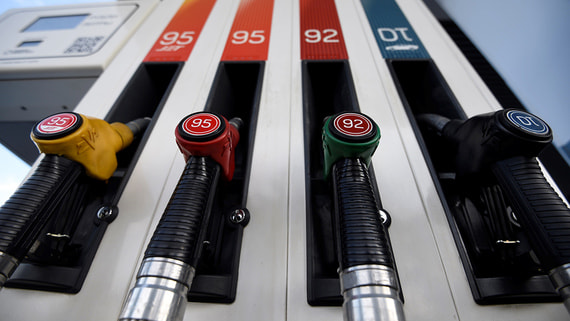
Economic analysts are warning that the indirect effects of rising gasoline prices will begin manifesting in consumer inflation figures starting in July, creating a cascading impact across multiple sectors of the economy. The assessment comes amid growing concerns about fuel costs and their broader implications for household budgets and business operations throughout Russia. As transportation costs rise, economists predict that everything from food prices to retail goods will experience upward pressure, potentially challenging the central bank’s inflation targets.
The Mechanics of Fuel-Driven Inflation
Gasoline prices serve as a fundamental input cost across virtually every sector of the modern economy. When fuel costs increase, the effects ripple outward in what economists call “cost-push inflation.” Transportation and logistics companies face higher operating expenses, which are subsequently passed on to retailers and ultimately to consumers. This chain reaction typically takes several weeks to fully materialize in official inflation statistics, explaining why experts anticipate the most significant impacts to appear in July rather than immediately.
The relationship between fuel prices and general inflation has been extensively studied by economists worldwide. In Russia, where vast distances between production centers and consumption markets make transportation costs particularly significant, the fuel-inflation connection is especially pronounced. Historical data suggests that a sustained 10% increase in gasoline prices can contribute between 0.3 and 0.5 percentage points to annual inflation over the following months, depending on the state of the broader economy and supply chain conditions.
Current Market Conditions and Price Dynamics
The current bout of gasoline price increases comes against a backdrop of complex domestic and international factors. Russian refineries have faced various operational challenges, while export dynamics and domestic demand patterns have shifted considerably over the past year. The government has implemented various measures to stabilize fuel markets, including adjustments to the damper mechanism that compensates oil companies for selling fuel domestically at prices below export parity. However, these interventions have had mixed results in containing price growth at the pump.
Market observers note that seasonal factors also play a significant role in fuel price dynamics. Summer traditionally brings increased demand as agricultural activities intensify and vacation travel peaks. This seasonal surge in consumption can exacerbate price pressures that might otherwise remain more contained. The agricultural sector, which relies heavily on diesel and gasoline for machinery and transportation, is particularly vulnerable to fuel cost increases during the critical summer growing and harvesting seasons.
Broader Economic Implications and Central Bank Response
The Bank of Russia closely monitors fuel prices as part of its inflation-targeting framework. Rising gasoline costs present a particular challenge for monetary policy because they represent a supply-side shock that cannot be easily addressed through interest rate adjustments alone. Raising rates might help contain secondary inflation effects by dampening demand, but it cannot address the fundamental cost increases that originate in energy markets. This creates a delicate balancing act for policymakers seeking to maintain price stability without unnecessarily constraining economic growth.
Consumer spending patterns also shift in response to fuel price changes. Households facing higher costs at the gas pump often reduce discretionary spending in other categories, which can have complex effects on overall inflation dynamics. Some sectors may experience reduced demand and price moderation, partially offsetting the inflationary impulse from energy costs. However, essential goods and services with inelastic demand typically see the full pass-through of transportation cost increases, disproportionately affecting lower-income households that spend a larger share of their budgets on necessities.
Looking ahead, economists emphasize the importance of monitoring both direct fuel price movements and the secondary effects that emerge with a lag. The July timeframe identified by experts represents the period when transportation cost increases fully work their way through supply chains and appear in retail prices. Government officials and central bank policymakers will be watching these developments closely as they consider potential responses, ranging from additional fuel market interventions to adjustments in monetary policy stance.
Expert Opinion: The delayed transmission of fuel price shocks to broader consumer prices represents a critical window for policy intervention. If authorities act decisively before July, they may be able to mitigate some of the secondary inflationary effects through targeted subsidies or supply-side measures. However, if gasoline prices remain elevated, Russia could see headline inflation exceed current forecasts by 0.5 to 0.8 percentage points in the second half of 2025, potentially prompting the Central Bank to maintain its restrictive monetary stance longer than markets currently anticipate.