

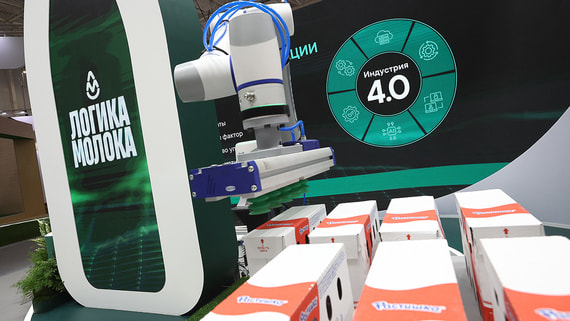
In a significant shift reflecting Russia’s changing economic landscape, a former Mercedes-Benz logistics facility in the Moscow region is set to undergo a dramatic transformation. The site, once dedicated to storing luxury German automobiles, will soon house a state-of-the-art dairy processing plant. The company behind this ambitious project, Logika Moloka (Logic of Milk), has announced plans to invest approximately 30 billion rubles (roughly $330 million USD) into the construction of this new facility, marking one of the largest investments in Russia’s dairy sector in recent years.
This development represents a broader trend in Russia’s industrial real estate market, where facilities vacated by Western companies following their exit from the Russian market are being repurposed for domestic production needs. Mercedes-Benz, like many other international automotive brands, significantly reduced its presence in Russia after 2022, leaving behind substantial warehouse and logistics infrastructure that is now being adapted for entirely different purposes.
Investment Details and Production Capacity
The planned dairy processing facility represents a substantial commitment to expanding Russia’s domestic food production capabilities. The 30 billion ruble investment will cover the complete renovation and retrofitting of the existing warehouse structures, as well as the installation of modern dairy processing equipment. Industry analysts suggest that facilities of this scale typically require 18 to 24 months for full conversion and commissioning, though Logika Moloka has not yet announced a specific timeline for when production is expected to begin.
The strategic location in the Moscow region offers significant logistical advantages for dairy distribution. The area’s proximity to Moscow, Russia’s largest consumer market with a metropolitan population exceeding 20 million people, ensures efficient delivery of fresh dairy products while minimizing transportation costs and spoilage. The existing transportation infrastructure originally built to support Mercedes-Benz’s automotive logistics operations will likely prove beneficial for the dairy plant’s distribution needs.
Russia’s Growing Dairy Industry
Russia’s dairy sector has experienced substantial growth over the past decade, driven largely by government policies promoting food security and import substitution. Following the implementation of counter-sanctions in 2014, which banned dairy imports from the European Union and several other Western countries, domestic producers have worked to fill the gap left by foreign suppliers. The Russian dairy market is estimated to be worth over 1.5 trillion rubles annually, with continued growth projected as consumer demand for high-quality dairy products increases.
The country has been investing heavily in modernizing its dairy infrastructure, with both federal and regional governments providing subsidies and preferential loans to agricultural producers and processors. Major dairy companies have expanded their operations, constructing new mega-farms and processing facilities across the country. Despite these efforts, Russia still faces a deficit in certain dairy categories, particularly in premium cheeses and specialized dairy products, creating opportunities for companies like Logika Moloka to capture market share.
Economic Implications and Future Outlook
The transformation of the former Mercedes-Benz facility into a dairy plant carries significant economic implications for the Moscow region. The project is expected to create hundreds of jobs in both construction and permanent positions once the plant becomes operational. Local authorities have generally welcomed such industrial conversions, which help maintain employment levels and tax revenues in areas affected by Western corporate departures. The dairy industry typically provides stable, long-term employment opportunities and supports adjacent sectors including agriculture, packaging, and logistics.
Looking ahead, this project exemplifies the ongoing restructuring of Russia’s industrial landscape as the country adapts to new economic realities. The conversion of automotive-related facilities into food production plants represents a practical response to both changed market conditions and government priorities emphasizing domestic food security. As similar conversions continue across the country, Russia’s food processing sector is positioned to expand significantly, though challenges related to equipment sourcing, technology transfer, and skilled labor availability remain important factors to monitor in the coming years.
Expert Opinion: This industrial conversion project signals a fundamental restructuring of Russia’s manufacturing priorities, with food security now taking precedence over luxury automotive logistics. The 30 billion ruble investment suggests strong confidence in the domestic dairy market’s growth potential, though success will ultimately depend on securing reliable milk supply chains and maintaining competitive pricing against established processors. Similar facility conversions across Russia could collectively reshape the country’s industrial geography over the next decade.