

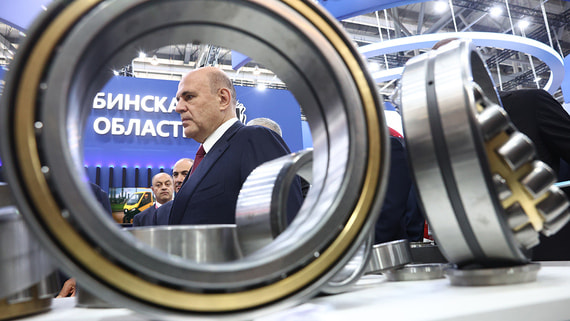
Yekaterinburg has once again become the epicenter of industrial innovation as the doors opened to Innoprom 2025, Russia’s largest exhibition of industrial solutions and technological achievements. The annual event, which has grown significantly since its inception in 2010, brings together manufacturers, technology developers, government officials, and industry experts from across Russia and partner nations to showcase cutting-edge developments and discuss the future trajectory of the country’s industrial sector. This year’s exhibition has placed particular emphasis on robotics, microelectronics, and the ongoing efforts to localize production of critical components amid shifting global supply chains.
Key Takeaways from Innoprom 2025
- Russian manufacturers unveiled new industrial robots and cobots designed to address labor shortages in manufacturing, mining, and logistics sectors.
- Government announced subsidized leasing programs, tax incentives, and workforce training initiatives to accelerate robotics adoption among enterprises.
- Semiconductor independence remains a long-term goal as new fabrication facilities are under construction despite global supply chain complexities.
- Delegations from China, India, Iran, Turkey, and Central Asian nations are negotiating joint ventures and technology sharing arrangements at the exhibition.
The timing of Innoprom 2025 is particularly significant as Russia continues to navigate complex economic challenges while simultaneously pursuing ambitious technological sovereignty goals. With Western sanctions having disrupted traditional supply chains and technology partnerships, Russian industry has been forced to accelerate domestic development programs across multiple sectors. The exhibition serves as both a showcase for these efforts and a platform for forging new partnerships with countries in Asia, the Middle East, and other regions willing to engage in technological cooperation.
Industrial Robots and Cobots Dominate the Exhibition Floor
Perhaps no sector has received more attention at this year’s Innoprom than robotics and automation. Russian manufacturers have unveiled a new generation of industrial robots designed to address labor shortages in manufacturing, mining, and logistics. The exhibition floor features demonstrations of collaborative robots, or cobots, that can work alongside human operators safely, as well as heavy-duty industrial systems capable of performing complex welding, assembly, and material handling tasks. Industry analysts note that Russia’s robot density in manufacturing still lags behind leaders like South Korea, Japan, and Germany, but domestic producers are working to close this gap with locally designed and manufactured systems that reduce dependence on foreign suppliers.
Government officials at the event announced new funding programs aimed at accelerating robotics adoption across Russian industry. These initiatives include subsidized leasing programs for small and medium enterprises, tax incentives for companies investing in automation, and expanded training programs to develop a workforce capable of operating and maintaining advanced robotic systems. The push for automation is driven not only by geopolitical considerations but also by demographic realities, as Russia faces an aging workforce and competition for skilled labor across multiple sectors of the economy.
Domestic Chip Manufacturing Faces Long Road Ahead
The development of domestic microelectronics capabilities has emerged as a central theme at Innoprom 2025, reflecting the critical importance of semiconductors to modern industry. Russian companies presented their latest achievements in chip design and manufacturing, though industry experts acknowledge that significant challenges remain in reaching parity with global leaders. The country’s semiconductor industry has received substantial government investment in recent years, with new fabrication facilities under construction and existing plants being upgraded to produce more advanced chips. However, the complexity of modern semiconductor manufacturing, which requires specialized equipment and materials from a global supply chain, means that full technological independence remains a long-term goal rather than an immediate achievement.
Discussions at the exhibition have focused on practical strategies for navigating the current technological landscape. These include developing partnerships with friendly nations that possess complementary capabilities, focusing on specific market segments where Russian producers can achieve competitive advantage, and investing heavily in research and development to leapfrog current technology generations. Some industry participants have pointed to China’s semiconductor industry as a model for rapid development under challenging circumstances, while others emphasize the need for a uniquely Russian approach that leverages the country’s strengths in mathematics, physics, and software development.
New Trade Partnerships Reshape Supply Chain Strategy
The broader theme of industrial localization has permeated discussions throughout Innoprom 2025. Russian manufacturers across sectors from automotive to heavy machinery have been working to reduce their dependence on imported components, with varying degrees of success. The exhibition features numerous examples of successful import substitution, including domestically produced industrial sensors, control systems, and specialized materials that previously had to be sourced from abroad. At the same time, participants openly acknowledge that complete self-sufficiency is neither achievable nor desirable, and that the goal should be strategic independence in critical areas while maintaining beneficial trade relationships wherever possible.
International participation at Innoprom 2025 reflects Russia’s evolving network of industrial partnerships. Delegations from China, India, Iran, Turkey, and various Central Asian and Middle Eastern nations have brought their own technologies and proposals for joint ventures. These partnerships represent a significant shift in Russia’s industrial orientation, with new supply chains and technology sharing arrangements emerging to replace those disrupted by geopolitical tensions. The exhibition has become an important venue for negotiating these new relationships, with multiple memoranda of understanding and partnership agreements expected to be signed before the event concludes.
Strategic Implications of Russia's Industrial Push
Innoprom 2025 reveals a Russian industrial strategy built on pragmatic selectivity rather than impossible autarky. The focus on robotics addresses a genuine demographic problem: an aging workforce combined with sanctions-driven urgency creates real incentive for automation investment. Whether domestic robot manufacturers can scale production quality remains the critical unknown.
The semiconductor situation is more sobering. Modern chip fabrication requires equipment and materials from specialized global suppliers, and no amount of government funding changes that reality overnight. The acknowledgment that parity with global leaders is a long-term goal signals realistic expectations rather than propaganda.
The international partnerships dimension may prove most consequential. Russia is actively constructing alternative supply chains with Asian and Middle Eastern partners, fundamentally reorienting its industrial relationships. These arrangements will shape Russian manufacturing capabilities for decades, regardless of how Western sanctions evolve.
Common Questions About Innoprom 2025
What is Innoprom and why does it matter?
Innoprom is Russia’s largest annual industrial exhibition, running since 2010. It serves as the primary venue for Russian manufacturers to showcase technological developments and negotiate partnerships with domestic and international players, particularly significant now as traditional Western supply chains have been disrupted.
How advanced is Russia's domestic robotics industry?
Russia’s robot density in manufacturing still trails leaders like South Korea, Japan, and Germany. However, domestic producers are developing locally designed industrial robots and cobots, supported by new government subsidies and training programs aimed at reducing foreign dependence.
Which countries are partnering with Russia at Innoprom 2025?
Delegations from China, India, Iran, Turkey, and various Central Asian and Middle Eastern nations attended with technology proposals and joint venture discussions. Multiple partnership agreements and memoranda of understanding are expected from the event.
Expert Opinion: The developments showcased at Innoprom 2025 suggest that Russia is making measurable progress in critical industrial sectors, though the path to true technological sovereignty will require sustained investment over many years. The most promising trajectory appears to be selective localization of strategic capabilities combined with deepening partnerships with technologically capable allies, rather than pursuing complete autarky. Success will ultimately depend on whether Russia can maintain the human capital and institutional frameworks necessary for sustained innovation in an increasingly competitive global landscape.