

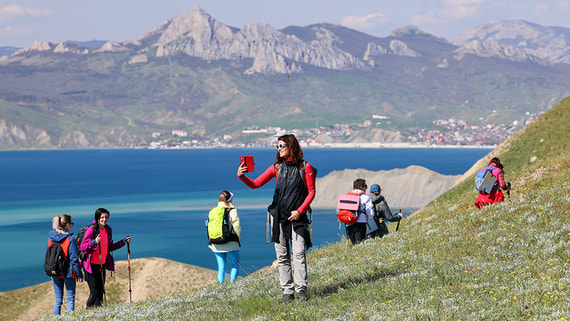
Recent data reveals that the majority of travelers who initially planned summer vacations to Crimea have decided to redirect their holiday plans to alternative destinations rather than canceling outright. According to the latest statistics, only 15 percent of tourists who abandoned their Crimean travel plans did so without booking trips elsewhere, indicating a significant shift in Russian domestic tourism patterns rather than an overall decline in travel appetite.
The findings suggest that Russian vacationers remain eager to travel despite geopolitical uncertainties and logistical challenges affecting certain regions. Instead of forgoing summer holidays altogether, most travelers are demonstrating flexibility by choosing substitute destinations that offer similar attractions – warm weather, beach access, and resort amenities – without the complications currently associated with Crimean travel.
Shifting Tourism Patterns in the Black Sea Region
The redistribution of tourist flows has created both challenges and opportunities for Russia’s tourism industry. Destinations along the Krasnodar Krai coastline, including popular resort cities like Sochi, Anapa, and Gelendzhik, have reported increased booking inquiries and higher occupancy rates. These mainland Black Sea resorts have historically competed with Crimea for summer tourists, and current circumstances have tipped the balance significantly in their favor.
Tourism industry analysts note that this shift reflects broader changes in traveler behavior since 2022. Infrastructure constraints, including limitations on air travel to Crimea and increased travel times via alternative routes, have made other destinations more appealing to time-conscious vacationers. The Crimean Bridge, while operational, has experienced periods of restricted access, adding uncertainty to travel planning that many tourists prefer to avoid during their limited vacation windows.
Economic Implications for Regional Tourism
The tourism redistribution carries significant economic implications for both Crimea and competing destinations. Crimean hospitality businesses, which have invested heavily in infrastructure development since 2014, face reduced revenues during what should be their peak earning season. Hotels, restaurants, and tour operators in the peninsula have been forced to offer substantial discounts and promotional packages to attract the diminished tourist flow.
Conversely, mainland Russian resorts are experiencing a demand surge that has driven prices upward. Some popular Krasnodar region hotels have reported rate increases of 20 to 30 percent compared to previous seasons, capitalizing on the redirected tourist demand. This price inflation has prompted some budget-conscious travelers to explore less traditional destinations, including locations in the Caucasus region and along the Caspian Sea coast, further diversifying Russian domestic tourism geography.
Future Outlook for Russian Domestic Tourism
Industry experts suggest that the current tourism patterns may establish new long-term trends in Russian domestic travel. Travelers who discover alternative destinations this summer may develop lasting preferences that persist even if conditions for Crimean travel improve. The 85 percent of former Crimea-bound tourists who chose alternative destinations rather than canceling entirely demonstrates the resilience of Russian domestic tourism demand and the industry’s capacity to adapt to changing circumstances.
Government tourism officials have emphasized ongoing investments in developing diverse vacation options across Russia’s extensive territory. From Baltic Sea beaches to Lake Baikal adventures, authorities are promoting a broader vision of Russian tourism that reduces dependence on any single destination while supporting economic development in multiple regions.
Expert Opinion: The 15 percent cancellation rate without alternatives indicates that Russian domestic tourism remains fundamentally healthy despite regional disruptions. This redistribution pattern suggests that established resort destinations will continue absorbing displaced demand, potentially accelerating infrastructure investment in mainland coastal regions. Long-term, we may witness a permanent recalibration of Russian domestic tourism geography, with travelers developing new destination loyalties that outlast current geopolitical circumstances.