

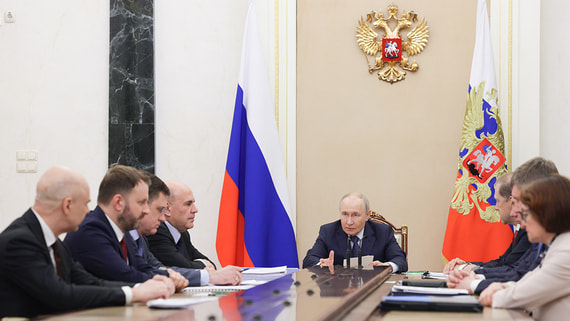
Russian business leaders have outlined a comprehensive set of proposals aimed at stimulating a new investment cycle in the country’s economy, following a direct request from President Vladimir Putin. The head of state has instructed business associations and government officials to prepare detailed initiatives that will be presented at the Strategic Development Council meeting scheduled for August. This coordinated effort comes at a critical juncture for the Russian economy, which faces significant challenges including high interest rates, international sanctions, and the need to restructure supply chains and develop domestic production capabilities.
Key Takeaways
- Major Russian business associations are coordinating proposals for state-backed investment funds offering below-market lending rates to counter prohibitively high borrowing costs.
- Tax incentives under consideration include expanded investment deductions, accelerated depreciation, and tax holidays for capital projects in priority sectors and regions.
- Regulatory reforms propose a ‘one window’ system where a single government body coordinates all permits for qualifying investment projects.
- Import substitution measures include state co-financing for R&D and guaranteed public procurement commitments to support domestic manufacturers.
- Final proposals will be presented at the Strategic Development Council meeting in August, with substantive policy changes expected in late 2025 or 2026.
Putin Orders Investment Package Ready by August Council Meeting
The presidential directive has mobilized Russia’s major business associations, including the Russian Union of Industrialists and Entrepreneurs (RSPP), the Chamber of Commerce and Industry, and Delovaya Rossiya, to collaborate on developing a unified package of investment stimulation measures. According to sources familiar with the discussions, business representatives have emphasized the urgent need for accessible financing mechanisms that would allow companies to implement large-scale modernization and expansion projects. The current economic environment, characterized by the Central Bank’s restrictive monetary policy with key interest rates remaining elevated, has made traditional bank lending prohibitively expensive for many enterprises seeking to invest in new equipment, technologies, and production facilities.
Industry leaders have particularly stressed the importance of creating specialized financial instruments that would offer preferential lending rates for strategic sectors of the economy. These sectors include manufacturing, agriculture, information technology, and infrastructure development. The business community has proposed establishing dedicated investment funds with state participation that could provide long-term financing at below-market rates, effectively bridging the gap between current high borrowing costs and the returns that investment projects can realistically generate. Historical precedents for such mechanisms exist in Russia’s experience with development institutions like VEB.RF and various sectoral support programs implemented during previous economic challenges.
Business Groups Push for Tax Breaks and Permit Fast-Tracking
| Category | Key Proposals |
|---|---|
| Financing | State-backed investment funds, preferential lending rates for strategic sectors |
| Tax Relief | Investment tax deductions, accelerated depreciation, tax holidays for priority regions |
| Regulatory | Streamlined permitting, 'one window' approval system, faster licensing |
| Import Substitution | R&D co-financing, pilot production support, public procurement guarantees |
Beyond financing mechanisms, the business community has advocated for significant tax incentives designed to encourage companies to reinvest profits rather than distribute them as dividends. Proposals include expanded investment tax deductions, accelerated depreciation schedules for new equipment, and tax holidays for enterprises undertaking major capital investments in priority regions or sectors. These measures echo successful policies implemented in other countries seeking to boost industrial investment, including similar programs in China, South Korea, and various European nations during periods of economic transformation. Russian business leaders have pointed to the effectiveness of Special Economic Zones and Territory of Advanced Development programs as evidence that targeted tax relief can successfully attract investment to specific regions and industries.
Regulatory simplification represents another major pillar of the proposed investment stimulus package. Business associations have called for streamlined permitting processes, reduced bureaucratic requirements for construction projects, and faster procedures for obtaining necessary licenses and certifications. The administrative burden on businesses seeking to implement investment projects has long been cited as a significant barrier to capital formation in Russia. Companies report that complex approval processes can add years to project timelines and substantially increase costs, particularly for industrial facilities that require multiple permits from various government agencies. The proposals suggest implementing a “one window” approach for investment projects above certain thresholds, where a single government body would coordinate all necessary approvals and serve as the primary interface between investors and regulatory authorities.
Domestic Production and Tech Independence Take Center Stage
A significant portion of the investment proposals focuses on import substitution and domestic technology development, reflecting the ongoing reorientation of the Russian economy following the imposition of Western sanctions. Business leaders have emphasized the need for coordinated programs that would support domestic manufacturers in developing alternatives to imported components, machinery, and technologies. This includes proposals for state co-financing of research and development activities, support for pilot production of new products, and guaranteed public procurement commitments that would provide demand certainty for domestic producers investing in new capabilities. The experience of recent years has demonstrated both the challenges and opportunities inherent in this transition, with many Russian companies successfully developing domestic alternatives while others continue to struggle with access to critical technologies and components.
The August Strategic Development Council meeting is expected to serve as a forum for finalizing and prioritizing these proposals, with subsequent implementation through government programs and legislative initiatives. Economic analysts note that the success of any new investment cycle will depend not only on the specific measures adopted but also on broader macroeconomic stability, including the trajectory of inflation and interest rates. The Central Bank has indicated that monetary policy easing will only occur once inflation sustainably returns to target levels, creating a tension between the immediate desire for cheaper credit and the longer-term goal of price stability. Business leaders acknowledge this challenge but argue that targeted investment support mechanisms can operate effectively even within a generally restrictive monetary environment, provided they are designed with appropriate safeguards against fueling inflationary pressures.
Tension Between Cheap Credit Demands and Inflation Control
The proposals reveal a fundamental tension at the heart of Russian economic policy: businesses need affordable financing to invest, but the Central Bank maintains elevated interest rates to combat inflation. The suggested workaround—state-backed funds offering below-market rates—essentially creates a parallel credit system for favored sectors. This approach has precedent through institutions like VEB.RF, but scaling it up carries fiscal risks if project returns fail to materialize.
The regulatory simplification push addresses a longstanding complaint. Multi-agency permitting processes that add years and significant costs to industrial projects have deterred investment for decades. A genuine ‘one window’ system would represent meaningful change, though implementation typically proves more difficult than the concept suggests. Previous administrative reform efforts in Russia have produced mixed results.
The import substitution component reflects post-sanctions economic reality. Guaranteed procurement commitments would reduce risk for companies developing domestic alternatives to Western technology, but this approach historically creates efficiency trade-offs. Companies operating with assured government demand face weaker incentives to optimize costs or quality. The challenge lies in designing support that builds genuine capability rather than permanent dependency on state contracts.
Common Questions
When will Russia's new investment stimulus measures take effect?
The proposals will be presented at the Strategic Development Council meeting in August. However, substantive policy changes requiring legislation or new government programs are expected to emerge only in late 2025 or early 2026 following deliberations and implementation planning.
Which sectors are prioritized for investment support in Russia?
The proposals specifically target manufacturing, agriculture, information technology, and infrastructure development as strategic sectors eligible for preferential financing and tax incentives. Import substitution programs also focus on developing domestic alternatives to critical technologies and components.
How do Russian businesses propose to overcome high interest rates?
Business associations advocate for dedicated state-backed investment funds that would provide long-term financing at below-market rates. This mechanism would bridge the gap between current high borrowing costs from commercial banks and the realistic returns that investment projects can generate.
Expert Opinion: The success of Russia’s proposed investment stimulus measures will largely depend on the government’s ability to balance short-term growth objectives with long-term fiscal sustainability. Given current geopolitical constraints and elevated interest rates, targeted sectoral support combined with meaningful regulatory reform offers the most promising path forward. However, businesses should expect a gradual implementation timeline, with substantive policy changes likely emerging only in late 2025 or early 2026 following the August council deliberations.