The Negro Leagues: History, Stars and Their Place in MLB Records
How Rube Foster's 1920 Negro National League began, the stars who defined the era, and how MLB recognized the Negro Leagues and added their stats in 2024.
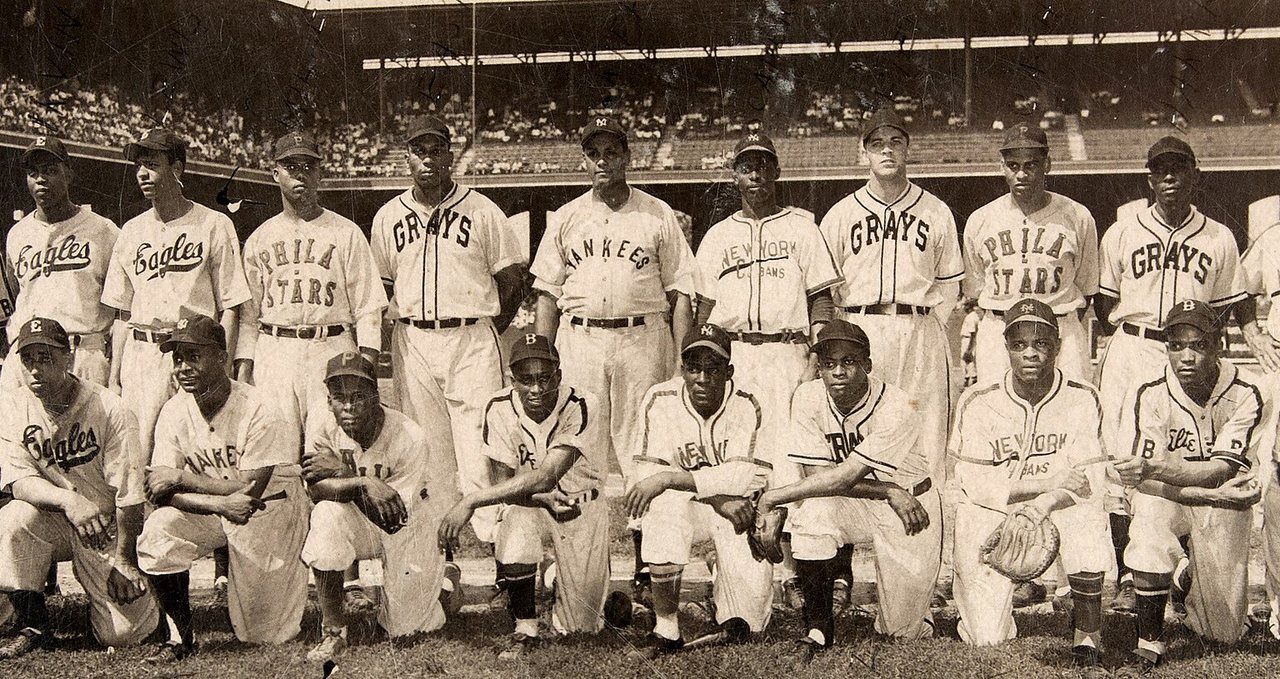
For the first half of the 20th century, some of the greatest baseball players in the world were shut out of the major leagues because they were Black. They did not stop playing. Instead, they built their own professional leagues, with their own pennant races, All-Star Games and World Series, and their own legends.
For decades, those leagues sat outside baseball’s official record books. That changed in December 2020, when Major League Baseball recognized seven Negro Leagues as major leagues, and in May 2024, when their statistics were integrated into MLB’s official records. This guide covers how the Negro Leagues began, who their biggest stars were, how they declined and what their recognition means today.
Before the Leagues
Black players appeared in professional baseball in the 19th century, but before the century was out an unwritten agreement among owners, the so-called color line, had pushed them out of the organized white leagues. For decades afterward, Black professional baseball existed mostly as independent barnstorming teams that traveled widely, playing whoever they could schedule, including local semipro clubs and white teams in exhibitions.
Without a league structure, those teams faced unstable schedules, unreliable finances and no recognized championship. One man set out to change that.
Rube Foster and the 1920 Negro National League
Andrew “Rube” Foster, born in Texas in 1879, was one of the best pitchers of the early 1900s, starring for top Black clubs such as the Cuban X-Giants and Philadelphia Giants. In 1910 he took control of the Leland Giants, which became the Chicago American Giants. As their manager from 1911 to 1926, he built one of the most successful Black teams of the pre-integration era.
Foster believed Black baseball needed its own organized league. In meetings held in Kansas City, Missouri, on February 13–14, 1920, he led the talks that established the Negro National League. It began with eight teams and was the first long-lasting professional league for Black players. Foster served as its president. Today he is known as the “father of Black baseball,” and he was elected to the National Baseball Hall of Fame in 1981.
The first Negro National League operated through 1931. Its success inspired other leagues, and over the next three decades several circuits rose and fell.
The Seven Recognized Major Leagues
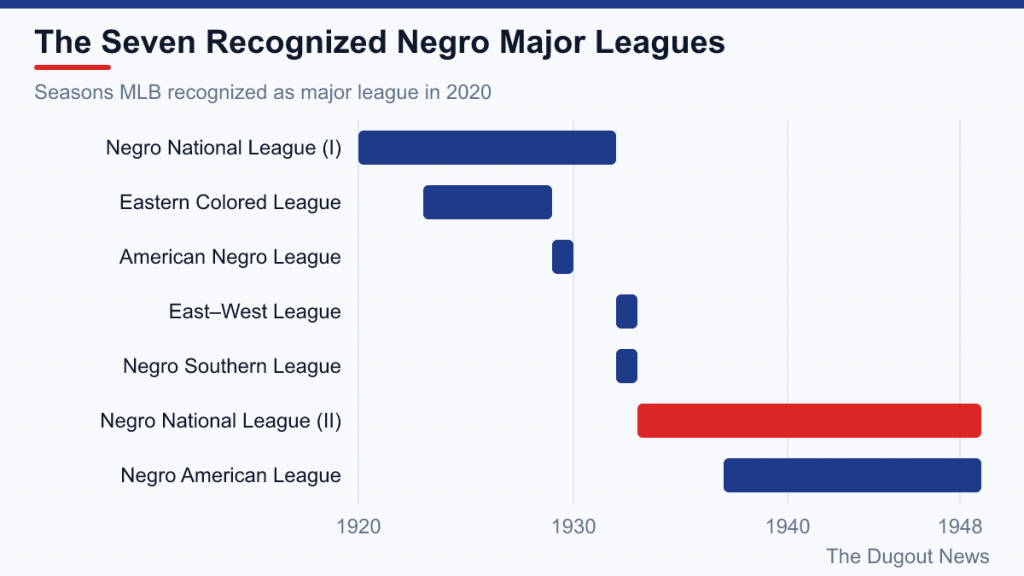
When MLB granted major league status in 2020, it covered seven leagues that operated between 1920 and 1948:
| League | Years recognized |
|---|---|
| Negro National League (I) | 1920–1931 |
| Eastern Colored League | 1923–1928 |
| American Negro League | 1929 |
| East–West League | 1932 |
| Negro Southern League | 1932 |
| Negro National League (II) | 1933–1948 |
| Negro American League | 1937–1948 |
The decision affected roughly 3,400 players. The Negro American League continued to operate after 1948, but only its seasons through 1948 are recognized as major league play.
The Golden Era: All-Stars and World Series
The 1930s and 1940s were the peak of the Negro Leagues. Two events stand out.
The East–West All-Star Game
The first East–West All-Star Game was played on September 10, 1933, at Comiskey Park in Chicago, before a crowd of about 20,000. Fans voted for the participants. The game became the showcase event of Black baseball, a once-a-year chance to see the stars of both leagues on the same field.
The Negro World Series
A championship series between the two leagues was revived in 1942 and played through 1948. During that span the Negro National League won four titles and the Negro American League three.
Teams such as the Kansas City Monarchs, Homestead Grays, Pittsburgh Crawfords and Chicago American Giants became famous well beyond their home cities. Teams traveled constantly, and many players kept playing through the winter in Latin America; Oscar Charleston, for one, played nine winter seasons in Cuba.
The Stars
Josh Gibson
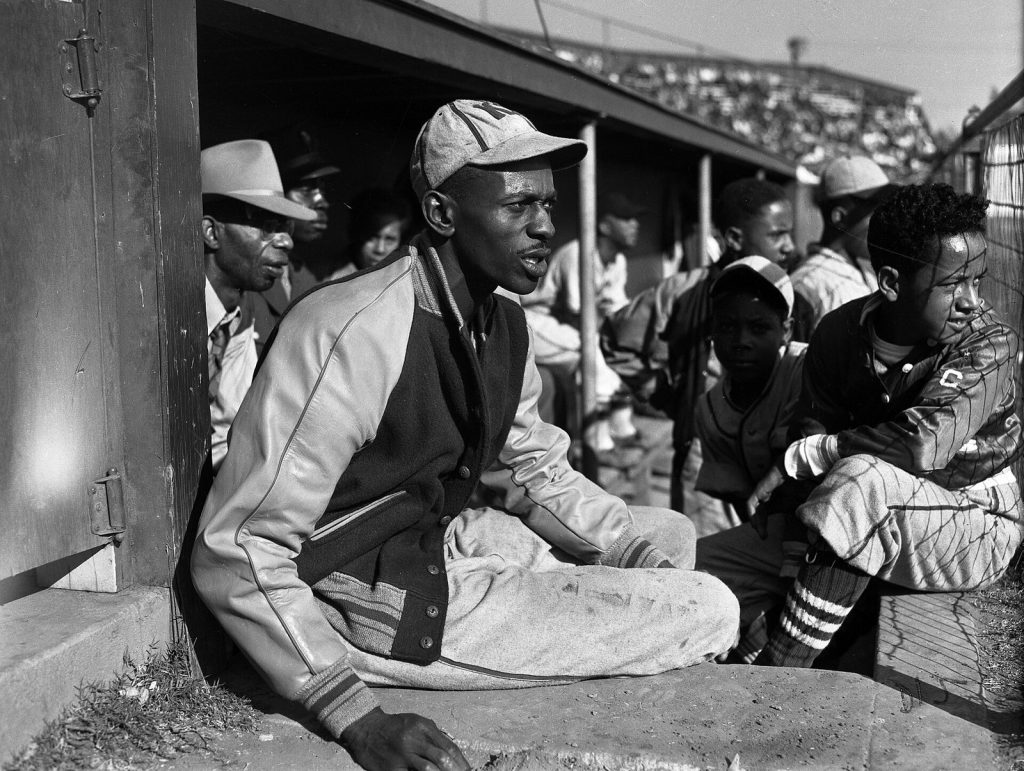
Catcher Josh Gibson, born in 1911 in Buena Vista, Georgia, starred for the Homestead Grays and Pittsburgh Crawfords from 1930 to 1946 and is widely regarded as one of the greatest hitters who ever lived. His Hall of Fame plaque credits him with “almost 800 home runs in league and independent baseball,” a total historians have been unable to verify, but his documented league statistics are extraordinary. After the 2024 integration of Negro Leagues statistics, Gibson holds MLB’s records for:
- Career batting average: .372
- Single-season batting average: .466, in 1943
- Single-season slugging percentage and OPS, both set in 1937
Gibson died of a stroke on January 20, 1947, at just 35, about three months before Jackie Robinson’s major league debut. He was inducted into the Hall of Fame in 1972.
Satchel Paige
Satchel Paige was the Negro Leagues’ most famous pitcher and one of the biggest gate attractions in baseball. He pitched for the Pittsburgh Crawfords and, from 1940 to 1947, the Kansas City Monarchs, and he and Gibson formed one of baseball’s most famous batteries. After integration, Paige debuted for the Cleveland Indians on July 9, 1948, at age 42, the oldest debut in major league history. That fall, he became the first Negro Leagues player to pitch in a World Series, and Cleveland won the title.
His last major league appearance came on September 25, 1965, for the Kansas City Athletics, at age 59. In 1971, Paige became the first player elected to the Hall of Fame through its special Negro Leagues committee.
Oscar Charleston
Oscar Charleston, a center fielder and first baseman who played from 1915 to 1941 and later managed, combined speed, power and defense. Bill James, the pioneering statistician, ranked him the fourth-best player of all time, behind Babe Ruth, Honus Wagner and Willie Mays. After the 2024 statistical integration, Charleston ranks among MLB’s all-time leaders in career OPS. He was inducted into the Hall of Fame in 1976.
Other Legends
- James “Cool Papa” Bell, a former pitcher turned center fielder, famed for his speed.
- Buck Leonard, the Homestead Grays’ first baseman and Gibson’s longtime teammate, inducted in 1972.
- Martín Dihigo, a Cuban star who excelled at nearly every position.
- Judy Johnson, John Henry “Pop” Lloyd and Monte Irvin, all among the early Negro Leagues inductees.
Integration and Decline
When Jackie Robinson, a former Kansas City Monarch, debuted for the Brooklyn Dodgers on April 15, 1947, the color line began to fall. Our article on Jackie Robinson breaking the color line tells that story in full. Larry Doby followed in the American League later that season, and by 1948 both the Dodgers and Cleveland had integrated.
Integration was a triumph, but it hollowed out the Negro Leagues. Fans followed the stars to the majors, and the best young players signed with major league organizations. The second Negro National League folded after the 1948 season. The Negro American League continued into the late 1950s, and the Indianapolis Clowns kept playing as a touring exhibition team into the 1980s.
Recognition: The Hall of Fame and MLB’s Records
The Hall of Fame
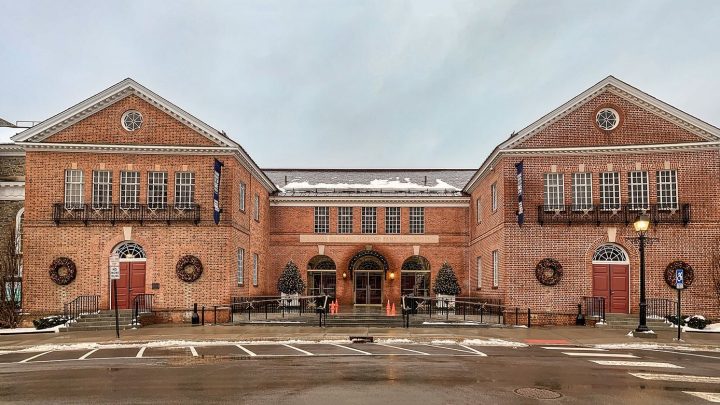
Recognition came in stages. In 1971, after initially planning a separate display, the National Baseball Hall of Fame admitted Negro Leagues players on an equal basis, and a special committee elected Satchel Paige. Over the next several years, that committee selected Bell, Charleston, Dihigo, Gibson, Irvin, Johnson, Leonard and Lloyd. In 2006, a committee of historians elected 17 more people connected to Black baseball, 12 players and 5 executives, after reviewing dozens of candidates.
MLB’s 2020 Decision
In December 2020, MLB announced that it was elevating the seven Negro Leagues of 1920 to 1948 to major league status. Players from those leagues became major leaguers in the official record.
The 2024 Statistical Integration
On May 28, 2024, after a research effort to compile the available league records, MLB officially integrated Negro Leagues statistics into its historical record. The most visible change: Josh Gibson replaced Ty Cobb as the all-time career batting average leader. Negro Leagues stars now also appear high on other leaderboards. In career OPS, for example, Oscar Charleston ranks fourth all-time; see our OPS and OPS+ guide for the full top five.
The statistics come with a caveat. Negro Leagues teams often played many games against non-league opponents, and records from that era are incomplete. The integrated numbers count only documented league games, which means samples are often smaller than modern seasons. That is why some single-season marks, such as Gibson’s .466 average, come from seasons far shorter than 162 games.
Common Questions
- Were all Negro Leagues recognized? No. MLB’s decision covers seven leagues between 1920 and 1948. Earlier independent teams and later seasons, such as the Negro American League’s play after 1948, are not part of the major league record.
- Do Negro Leagues players count as major leaguers now? Yes. Players who appeared in the recognized leagues during those years are considered major league players, and their documented statistics appear in MLB’s official records.
- Why are some records based on short seasons? League schedules were much shorter than today’s, and many games against non-league opponents do not count. A player can lead an all-time list on fewer league games than a modern regular.
- Did Gibson and Paige play together? Yes. They formed the battery on opening day at Pittsburgh’s Greenlee Field on April 30, 1932.
- Who was the first Negro Leagues player in the Hall of Fame? Satchel Paige, in 1971.
Where to Learn More
The Negro Leagues Baseball Museum, established in 1990, is located in the historic 18th & Vine Jazz District of Kansas City, Missouri, the same city where Rube Foster’s 1920 meetings created the Negro National League. It describes itself as the world’s only museum dedicated to preserving the history of African American baseball. The National Baseball Hall of Fame in Cooperstown also includes Negro Leagues exhibits and plaques.
Visiting either is the best way to see the artifacts, photographs and stories that the statistics alone cannot capture.