The Catcher’s Job: Framing, Blocking and Calling a Game
What catchers do: pitch framing and how Statcast measures it, blocking, pop time and the running game, game calling with PitchCom, and the one-knee setup.
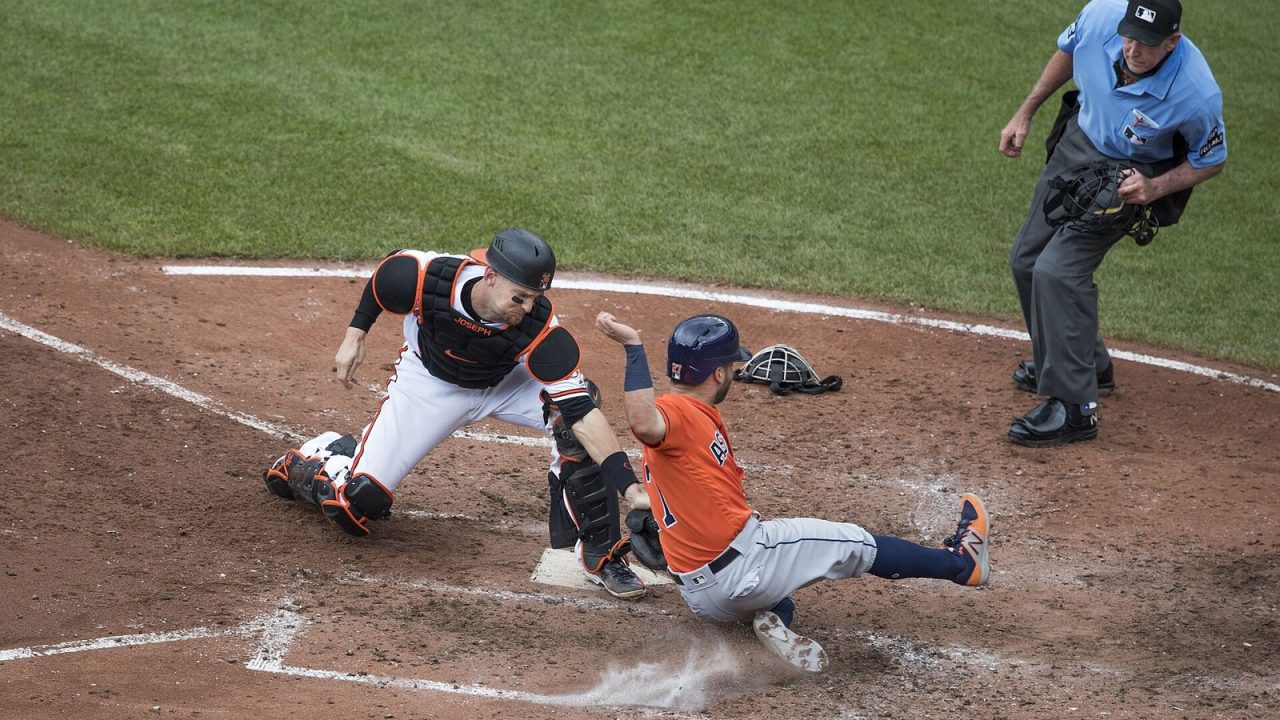
The catcher is involved in every pitch of every inning his team spends in the field. He crouches behind the plate for hours, takes foul tips off his mask, blocks pitches in the dirt, throws out base stealers and decides, or helps decide, what the pitcher throws next. Old-timers called his gear the “tools of ignorance,” an ironic nickname, since catchers are usually the players who understand the game’s tactics best.
For a long time, much of a catcher’s defensive value was invisible in the box score. Pitch tracking changed that. Today, the main parts of the job can be measured, and the measurements have reshaped how catchers set up and how teams value them. Here is a breakdown of the four core skills.
Pitch Framing: Earning Extra Strikes
Framing, also called presentation or receiving, is the skill of catching borderline pitches in a way that makes them more likely to be called strikes. The rulebook strike zone is a three-dimensional space over home plate (our guide to the strike zone covers the official definition), but a human umpire must judge it in a fraction of a second. How the catcher receives the pitch influences that judgment.
How good framing looks
- A quiet body. The catcher keeps his head and torso still so the umpire’s view is not disturbed.
- Receiving the ball, not stabbing at it. Good framers catch the ball with soft, controlled glove movement, often catching the outer half of the ball so the glove appears to stay in or near the zone.
- A brief stick. Holding the glove still for a moment after the catch gives the umpire a clear look at where the pitch ended up.
- Working low pitches. The bottom of the zone is where most framing value is won or lost, which is why stance has become so important (more on that below).
What framing is not: yanking an obvious ball back into the zone. Umpires notice that, and exaggerated movement tends to cost strikes rather than gain them.
How Statcast measures framing
Baseball Savant’s catcher framing leaderboard divides the area in and around the zone into “attack zones” and looks at every pitch the batter does not swing at. The key area is the shadow zone, the edges of the strike zone, roughly one ball width inside and one ball width outside. For each catcher, Statcast reports the percentage of shadow-zone takes called strikes and converts the extra strikes into runs.
Statcast’s Catcher Framing Runs uses a value of 0.125 runs per strike, based on Tom Tango’s research, and adjusts for park and pitcher. A catcher must receive at least six called pitches per team game to qualify for the leaderboard. Across a full season, the gap between the best and worst framers can amount to a meaningful number of runs, which is why teams began paying for this skill once it could be quantified.
Blocking: Keeping the Ball in Front
When a pitch bounces in the dirt, the catcher’s job is to keep it from getting away so runners cannot advance. Blocking technique is usually taught as a sequence: shift into the ball’s path, drop to the knees, put the glove between the legs to close the gap, and lean forward with the chest so the ball deadens and drops in front rather than ricocheting.
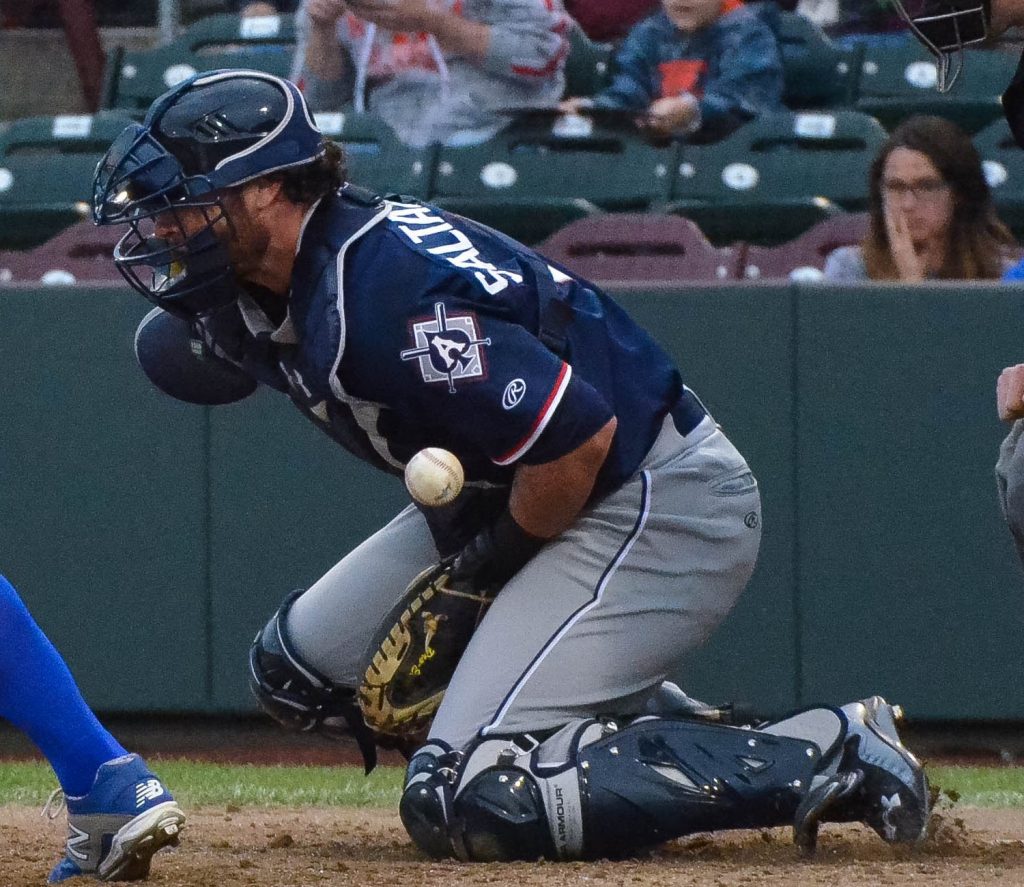
Blocking matters more than ever because modern pitchers throw so many breaking balls and splitters designed to dive below the zone. A catcher who cannot block those pitches with runners on base limits what his pitcher can throw.
How blocking is measured
Statcast’s catcher blocking metric gives each pitch a probability of becoming a wild pitch or passed ball, based on its location, speed and movement, the catcher’s position and the handedness of the batter and pitcher. A catcher who blocks a pitch that had a 10 percent chance of getting away earns +0.10; if it had a 90 percent chance, he earns +0.90. The totals are expressed as Blocks Above Average and converted to Catcher Blocking Runs at 0.25 runs per block.
A note on scoring: whether a pitch that gets away is ruled a wild pitch or a passed ball is up to the official scorer. A passed ball is charged to the catcher when he should have caught or controlled the pitch with ordinary effort; a wild pitch is charged to the pitcher when the pitch was too difficult to handle.
Controlling the Running Game
A catcher’s arm is his most visible tool. Base stealers time the pitcher’s delivery and the catcher’s throw, and a quick, accurate catcher discourages them from running at all.
Pop time
Statcast defines pop time as the time from when the pitch hits the catcher’s mitt to when the ball reaches the fielder’s projected receiving point at the center of the base. It has two components:
- Exchange time: how quickly the catcher gets the ball out of his glove and releases it.
- Arm strength: how hard he throws, measured in miles per hour on his maximum-effort throws.
According to Baseball Savant, the major league average pop time on steal attempts of second base is about 2.0 seconds. Elite catchers are meaningfully faster, and every tenth of a second matters on a close play at second. A quick exchange can compensate for an average arm, and footwork often separates good throwers from great ones.
The bigger picture
Controlling the running game is a shared job. The pitcher’s time to the plate, his pickoff moves and his willingness to vary his timing all affect whether a runner can steal. Since 2023, larger bases and limits on pickoff attempts have made stealing easier, putting more pressure on catchers; our guide to the pitch clock and pickoff limits explains those rules.
Calling a Game
Game calling means choosing pitch type and location based on the pitcher’s strengths, the hitter’s weaknesses, the count, the base-out situation and the score. Catchers study scouting reports and work with pitching coaches before each series, and they adjust during the game based on what is working that night.
Calling a game well involves:
- Knowing the pitcher. Which pitches he can command today, and which he is struggling with.
- Reading hitters. Adjustments in stance, timing or swing decisions can signal what a hitter is looking for.
- Sequencing. Setting up a pitch with what came before it, such as using a fastball up to make a breaking ball down more effective.
- Managing the pitcher. Recognizing when he is tiring or frustrated, and visiting the mound when needed.
Today, much of the plan is built by the analytics and coaching staff before the game, but the catcher still executes it pitch by pitch and makes real-time adjustments. A strong relationship with the pitching staff, starters and relievers alike, is a big part of the role. For more on how those staffs are organized, see our guide to starters, relievers, closers and openers.
PitchCom
For more than a century, catchers called pitches with finger signs, which opposing teams sometimes tried to decode, especially with a runner on second who could see the catcher’s fingers. PitchCom replaced much of that. It is a wireless system: the catcher presses buttons on a keypad, usually worn on his wrist, and a recorded voice tells the pitcher, through a small receiver in his cap, which pitch and location have been called. Receivers can also be worn by up to three other fielders so they can anticipate where the ball might be hit. Communications are encrypted, and voices can be set to different languages.
PitchCom was tested in the minor leagues in 2021 and approved for MLB before the 2022 season. In 2023 MLB also allowed pitchers to call their own pitches using the system. If the device malfunctions, the catcher or pitcher must tell the umpire right away. Beyond reducing sign stealing, PitchCom speeds up the pace between pitches, which became even more important once the pitch clock arrived.
The One-Knee Setup
One of the most visible changes in catching over the past several years is the spread of the one-knee-down setup, in which the catcher drops one knee to the ground instead of balancing in a traditional crouch on both feet.
The reason is framing. A catcher whose body is lower can receive low pitches without dropping his glove and moving his body as much, which helps those pitches look like strikes. Baseball America’s tracking of regular MLB catchers found that the one-knee setup went from 39 percent of catchers in 2020 to 56 percent in 2022, and that by 2023 about 68 percent used it with runners on base.
The early concern was that one-knee catchers would block and throw worse. The data have not supported that worry. Baseball America found that most of the league’s top blockers and throwers used a one-knee setup, and that passed ball and wild pitch rates dropped as the stance spread. Many catchers use a hybrid, staying on one knee with the bases empty and rising into a more traditional crouch with runners on base.
How Automated Balls and Strikes Change the Picture
Starting with the 2026 season, MLB uses the Automated Ball-Strike (ABS) challenge system. Human umpires still call every pitch, so framing still earns strikes, but batters, pitchers and catchers can challenge a limited number of calls. That adds a new skill to the catcher’s job: knowing when a call is worth challenging. Figures compiled for the 2026 regular season show catchers had the highest challenge success rate of the three groups allowed to challenge, which makes sense, since they see the pitch arrive from the best vantage point on the field.
Other Responsibilities
- Fielding bunts and pop-ups around home plate, including tricky foul pop-ups that drift back toward the infield.
- Plays at the plate. Since 2014, a catcher may not block the plate without the ball, which has changed how catchers receive throws on close plays at home.
- Avoiding catcher’s interference. If the catcher’s glove contacts the bat during a swing, the batter is awarded first base and the catcher is charged with an error.
- Leadership. Catchers position fielders, relay the defensive plan and often serve as the field general.