Babe Ruth’s Legacy: How One Player Changed Baseball
From Red Sox pitcher to Yankees slugger: the 1920 sale, the 60-homer 1927 season, 714 career home runs and how Babe Ruth changed the way baseball is played.
Plenty of players have dominated their eras. Very few changed what the game itself looked like. George Herman “Babe” Ruth did. Before him, the home run was an occasional event and the best offenses won by stringing together singles, bunts and stolen bases. By the time he retired, power hitting was the center of the sport, and it has stayed there ever since.
This is the story of how a Baltimore teenager became a star pitcher, then the greatest slugger of his time, and why his influence on baseball reaches far beyond his record book.
From Baltimore to Boston
Ruth was born in Baltimore, Maryland, on February 6, 1895. At age seven he was sent to St. Mary’s Industrial School for Boys, a reformatory and orphanage where he spent much of the next 12 years and where he learned to play baseball.
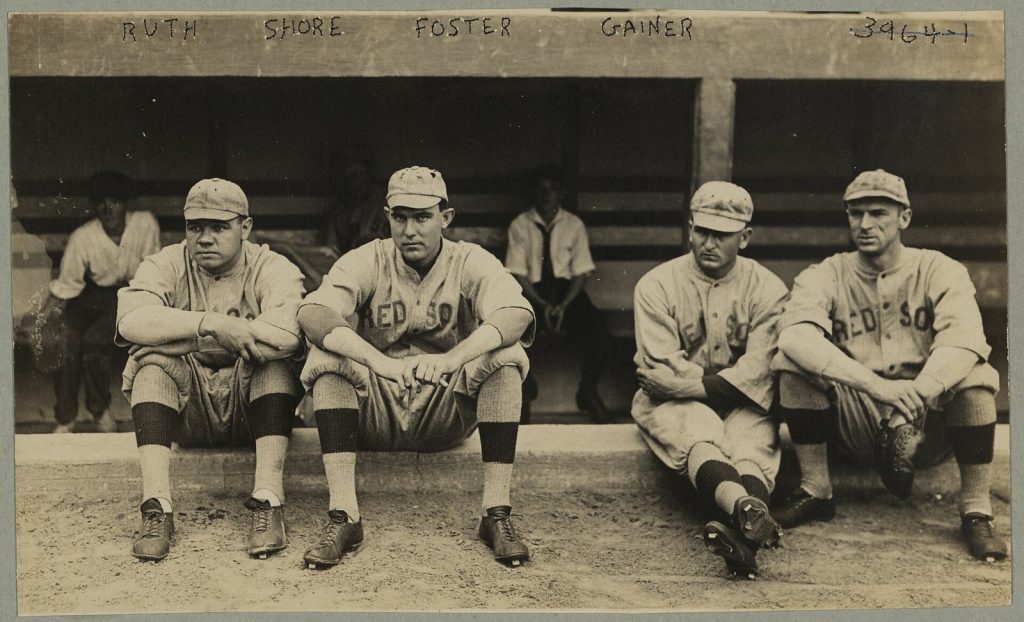
In 1914 he signed with the Baltimore Orioles, then a minor league club, and that July his contract was sold to the Boston Red Sox. He made his major league debut on July 11, 1914, at age 19.
An elite pitcher first
The most surprising fact about Ruth, for modern fans, is that he began as a pitcher, and a very good one. He was a left-handed starter for the Red Sox and helped them win the World Series in 1915, 1916 and 1918. In the World Series he threw 29⅔ consecutive scoreless innings, a record that stood until Whitey Ford broke it in 1961.
His career pitching record finished at 94–46 with a 2.28 ERA. Had he stayed on the mound, he might well have built a Hall of Fame case as a pitcher. Instead, his bat became too valuable to use only every fourth or fifth day.
The move to the outfield
Boston gradually began using Ruth in the outfield on days he did not pitch, and by 1919 he was playing the field nearly full time. That season he hit 29 home runs, a new major league single-season record. In an era when league leaders often hit fewer than a dozen, that number was astonishing.
The Sale to the Yankees
After the 1919 season, Red Sox owner Harry Frazee sold Ruth’s contract to the New York Yankees for $100,000, the largest sum ever paid for a player up to that point. The deal was dated December 26, 1919, and announced on January 6, 1920.
The sale became one of the most famous transactions in sports history, for two reasons. First, it transformed the Yankees, who had never won a pennant, into the sport’s dominant franchise. Second, the Red Sox did not win another World Series until 2004. Generations of Boston fans blamed the drought on the “Curse of the Bambino,” a nickname that turned one bad trade into folklore.
The Home Run Revolution
Ruth’s first seasons in New York broke the game’s understanding of what a hitter could do.
| Season | Home runs | Note |
|---|---|---|
| 1919 (Red Sox) | 29 | Then the single-season record |
| 1920 (Yankees) | 54 | Shattered his own record in his first Yankees season |
| 1921 | 59 | Broke the record again, with 177 runs and 457 total bases |
| 1927 | 60 | A record that stood for 34 years |
The Baseball Hall of Fame notes that his 177 runs scored and 457 total bases in 1921 still stand as modern-era (post-1900) records, a measure of how far ahead of his time he was. Also in 1921 he passed Roger Connor to become the career home run leader, a title he would hold for more than half a century.
Ruth and the live-ball era
The years around 1920 marked the shift from the dead-ball era to the live-ball era. Historians point to several contributing changes in how the game was played and officiated, but Ruth was the clearest demonstration of what was possible. Teams and hitters noticed that swinging for distance could pay off far more than the old one-base-at-a-time approach, and power hitting spread through the sport. For more on how the eras of baseball unfolded, see our short history of MLB.
The Yankees Dynasty and 1927
With Ruth in the lineup, the Yankees became a powerhouse. They needed a bigger home, and Yankee Stadium opened in 1923. Ruth hit the first home run in the new ballpark, which quickly became known as “the House that Ruth Built.” He won the American League MVP award in 1923 and the batting title in 1924 with a .378 average.
The 1927 Yankees, whose lineup was nicknamed “Murderers’ Row,” are often cited as one of the greatest teams ever assembled. That season Ruth hit 60 home runs, breaking his own record. The mark stood until Roger Maris hit 61 in 1961. (During that chase, Commissioner Ford Frick suggested the new record should be listed separately unless it was set within 154 games, the schedule length in Ruth’s day, but no separate designation was ever actually made.)
In all, Ruth helped the Yankees win seven American League pennants and four World Series titles. He led the AL in home runs 12 times. For the bigger picture of how the Yankees built their record title count, see our guide to World Series history.
The called shot
One of the most debated moments in baseball history came in Game 3 of the 1932 World Series against the Chicago Cubs. In the fifth inning, facing Charlie Root, Ruth made a gesture, possibly toward center field, before hitting a long home run there. Whether he was actually predicting the homer, or simply gesturing at the Cubs’ bench, is still disputed. The legend endured because it fit the larger-than-life image Ruth had already built.
The Numbers
Ruth’s career offensive totals remain among the best ever recorded:
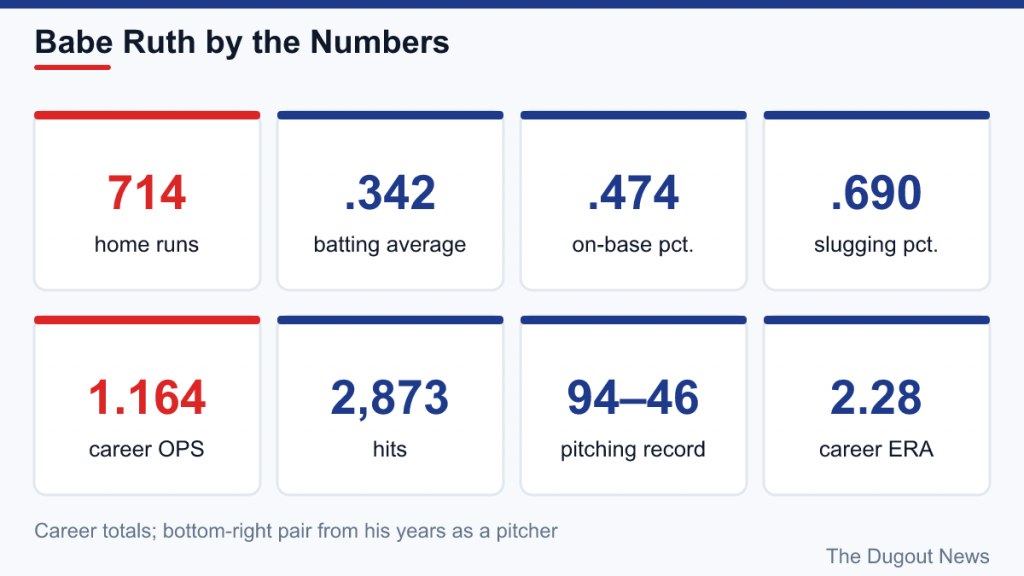
- 714 home runs, the career record until Hank Aaron hit his 715th on April 8, 1974, in Atlanta
- .342 batting average
- .474 on-base percentage
- .690 slugging percentage
- 1.164 OPS
- 2,873 hits and more than 2,000 walks and more than 2,200 RBIs (exact RBI totals vary slightly by source because RBIs were not official in his earliest seasons)
His career slugging percentage and OPS are still the standards against which great hitters are measured. If you want to understand why OPS captures so much of a hitter’s value, our guide to OPS and OPS+ explains the math.
When he retired, Ruth held career records for home runs, slugging percentage, RBIs, walks and on-base percentage. Some of those have since been passed, but he still ranks near the top of many all-time leaderboards.
The Final Seasons
Ruth’s last Yankees season was 1934. In 1935 he joined the Boston Braves, hoping for a path to managing. His final season was short and difficult, but it produced one last great day: on May 25, 1935, at Forbes Field in Pittsburgh, he went 4-for-4 with three home runs. The last of them cleared the right-field upper deck and was the first fair ball ever hit completely out of Forbes Field. They were the final home runs of his career. He retired a few days later, in early June.
The managing job he wanted never came. Ruth was diagnosed with cancer in 1946 and died in New York City on August 16, 1948, at age 53. The Yankees retired his number 3.
The Hall of Fame and the First Five
In 1936, the National Baseball Hall of Fame held its first election. Five players were chosen: Ty Cobb, Honus Wagner, Christy Mathewson, Walter Johnson and Babe Ruth. Ruth received 95.1 percent of the vote. He was elected on the first ballot.
His Hall of Fame plaque sums up his impact in a single line: he “changed baseball on and off the field.”
Why His Legacy Matters
Ruth’s influence goes beyond any single record:
- He changed offensive strategy. After Ruth, teams built lineups around power, and the home run became the most valuable single outcome in the game.
- He was the first true baseball celebrity. His fame extended well beyond sports, helping turn baseball into a national entertainment business in the 1920s.
- He was a two-way star. For a century, his combination of elite pitching and hitting was considered unrepeatable. Modern two-way players are still measured against him.
- He built a franchise. The Yankees’ identity as baseball’s dominant team began with his arrival.
Comparing across eras
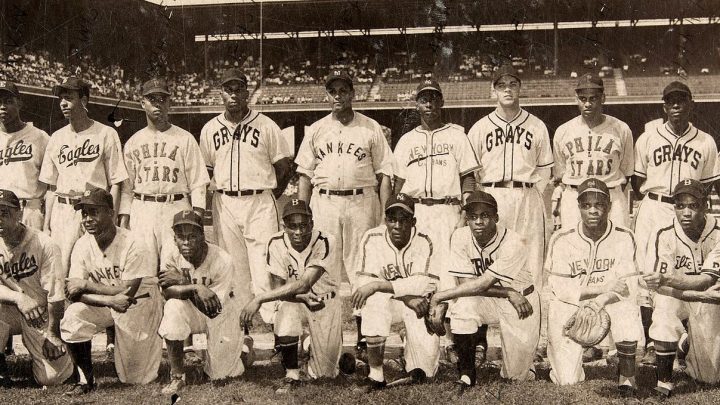
Fans often ask how Ruth would fare today. The honest answer is that comparisons across eras are difficult. Ruth played in a league that excluded Black players, before night games, before transcontinental travel and before modern specialized relief pitching. On the other hand, he dominated his peers by margins few players in any era have matched, and that is the clearest measure available. Era-adjusted stats exist precisely so fans can compare a player to his contemporaries rather than to players a century apart.
Common Myths About Ruth
- “He was only a hitter.” He was a top pitcher first and won three World Series with Boston.
- “His 60 homers were officially marked with an asterisk after 1961.” Frick’s suggestion was never formally implemented.
- “The called shot is proven.” It remains disputed by eyewitnesses and historians.
Quick Facts
How many World Series did Ruth win?
Seven in total: three as a member of the Red Sox (1915, 1916 and 1918) and four with the Yankees.
How long did his career home run record last?
Ruth became the career leader in 1921 and finished with 714. Hank Aaron passed him with his 715th home run in 1974, so Ruth held the career mark for more than 50 years. Aaron finished with 755.
How long did the 60-homer record last?
From 1927 until Roger Maris hit his 61st on October 1, 1961, the final day of the Yankees’ season, a span of 34 years.
Where did his career begin and end?
It began with the Red Sox in July 1914 and ended with the Boston Braves in 1935, so the city of Boston bookended his major league career.