Automated Balls and Strikes: How the ABS Challenge System Works
How MLB's Automated Ball-Strike challenge system works: who can challenge, how the zone is set by batter height, its minor league testing and 2026 debut.
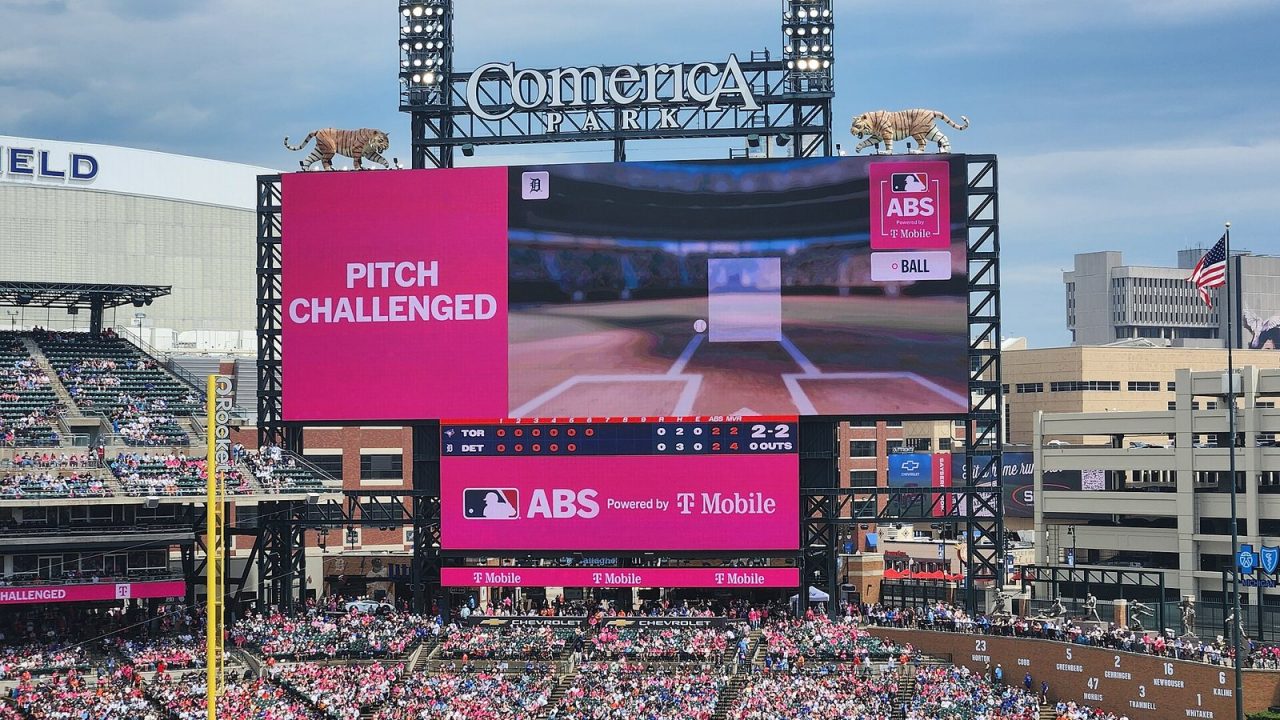
For as long as baseball has had umpires, the strike zone has been a matter of human judgment. A pitch on the black might be a strike from one umpire and a ball from another, and arguing balls and strikes has always been grounds for ejection. In 2026, that changed. Major League Baseball introduced the Automated Ball-Strike (ABS) challenge system, which lets players appeal a ball or strike call to a camera-based tracking system in real time.
The idea is often described as “robot umpires,” but the version MLB adopted keeps human umpires in charge of nearly every pitch. This guide explains how the system works, how the automated zone is defined, how it was tested and what it means for the game.
Why MLB Wanted an Automated Zone
The push for automation grew as pitch tracking made umpire accuracy easy to measure. Once every pitch was tracked and published, fans and broadcasters could see a missed call within seconds, often on a graphic during the broadcast. A 2019 study cited on Wikipedia estimated that umpires made roughly 34,000 incorrect ball and strike calls during the 2018 season, and found that more than 20 percent of certain kinds of pitches were called incorrectly.
Those numbers do not mean umpires are bad at their jobs; calling a pitch moving at well over 90 miles per hour, with late break, from a crouch behind the catcher is extraordinarily difficult. But they made the case that technology could fix the most consequential mistakes without slowing the game down.
Full Automation vs. a Challenge System
There are two basic ways to use automated ball-strike technology:
- Fully automated: the system calls every pitch, and the home plate umpire simply relays the call, usually through an earpiece.
- Challenge system: the human umpire calls every pitch as usual, and players can challenge a limited number of calls. Only challenged pitches are checked against the automated zone.
MLB tested both in the minor leagues and chose the challenge system for the majors. The approach keeps the human element and the umpire’s role in the game while giving teams a way to fix the most obvious mistakes, especially in high-leverage moments.
How a Challenge Works in MLB
The rules of the MLB challenge system, as adopted for 2026, are straightforward:
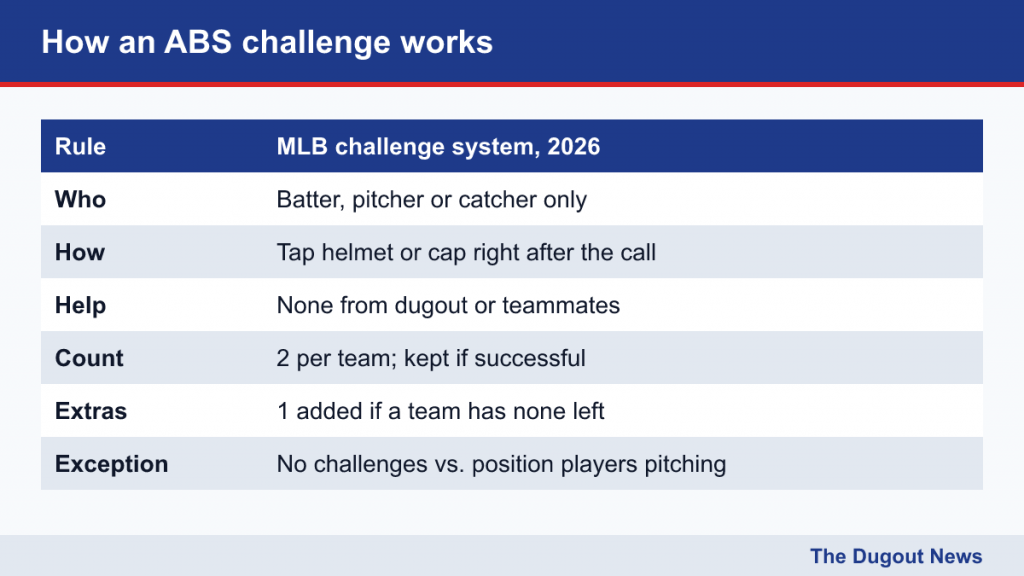
- Who can challenge: only the batter, the pitcher or the catcher. Managers and coaches cannot challenge pitches.
- How: the player taps his helmet or cap immediately after the call.
- No outside help: the player must decide on his own, without signals or input from teammates in the dugout or on the field.
- How many: each team starts the game with two challenges. If a challenge is successful, the team keeps it. If the original call is upheld, the team loses that challenge.
- Extra innings: a team that begins an extra inning with no challenges remaining receives one for that inning. Teams with challenges left do not get more.
- Position players pitching: challenges are not allowed while a position player is on the mound.
What fans see
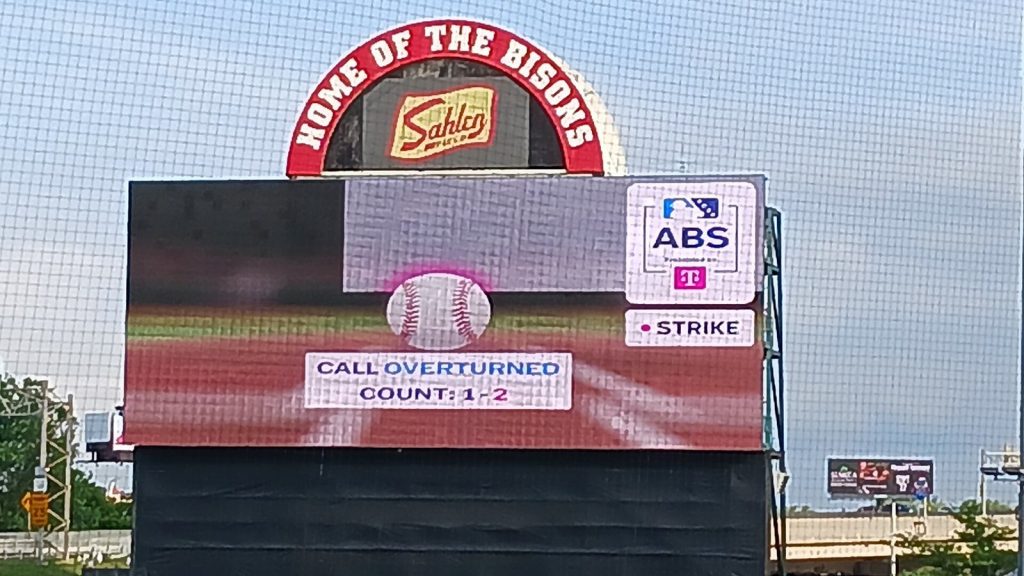
When a player challenges, the result is shown quickly to everyone in the ballpark, with a graphic of the pitch location relative to the zone displayed on the video board. The umpire then confirms or reverses the call, and the count changes accordingly. Because the decision is based on tracking data rather than a video review, it takes only seconds, far faster than a manager’s replay challenge.
This is completely separate from the replay system for plays like tags and force outs, which still uses manager challenges and the replay center in New York. Our guide to instant replay and manager challenges covers that system.
How the Automated Zone Is Defined
The rulebook strike zone (explained in our strike zone guide) runs from the midpoint between the batter’s shoulders and the top of his pants down to the hollow beneath the kneecap, over home plate. Those landmarks depend on the batter’s stance, which is hard for a machine to measure consistently. So the ABS zone is defined differently:
| Element | ABS definition |
|---|---|
| Width | 17 inches, the width of home plate |
| Top of zone | 53.5 percent of the batter’s height |
| Bottom of zone | 27 percent of the batter’s height |
| Where it is measured | At the midpoint of the plate, 8.5 inches from the front and back |
What that means in practice
- Height-based, not stance-based. A batter who crouches does not shrink his zone. The zone is set by his height, not by how he stands in the box.
- A two-dimensional slice. Under the traditional rule, a pitch is a strike if any part of the ball passes through any part of the zone. ABS judges the pitch at one plane, the middle of the plate. A breaking ball that clips the front of the zone but drops out of it by the midpoint can be a strike to an umpire and a ball to ABS.
- No buffer. The ABS zone has no margin of error built in, unlike the internal standards MLB uses to evaluate umpires. A pitch is either in or out.
The zone percentages were adjusted during testing. The bottom started at 28 percent before settling at 27, and the top was raised from 51 percent to 53.5 percent. MLB also tested a wider, 19-inch zone in 2022 before going back to the width of the plate.
The Technology
MLB’s system relies on Hawk-Eye camera tracking installed in every ballpark, connected through a private 5G network provided by T-Mobile, which also sponsors the system. Pitch locations are reported in increments of a tenth of an inch. During 2026 spring training games, MLB reported a median margin of error of about 0.16 inches.
The earliest professional tests, in the independent Atlantic League in 2019, used a TrackMan tracking system that fed calls to the umpire through an earpiece.
The Road to the Majors
ABS took several years to move through the professional ranks:
- 2019: The independent Atlantic League became the first professional league to use automated calls.
- 2021: ABS was used in the Low-A Southeast league (the Florida State League) and in the Arizona Fall League. The fall league trial drew complaints that breaking balls were being called strikes even after dropping below the zone.
- 2022: Triple-A testing began in five ballparks.
- 2023: ABS expanded to every Triple-A ballpark. Some games used full automation and others used challenges, allowing MLB to compare the two.
- 2024: Triple-A switched to challenges only starting June 25. Challenges succeeded 51 percent of the time that season.
- 2025: The challenge system was tested in MLB spring training at 13 ballparks hosting 19 clubs, and it was used in the 2025 All-Star Game. In September 2025, MLB’s competition committee approved the challenge system for the 2026 regular season.
- 2026: The ABS challenge system debuted in the major leagues.
Other leagues have adopted the technology too. South Korea’s KBO League began using fully automated calls in 2024, without a challenge system.
The First MLB Season: What Happened
According to figures compiled on Wikipedia for the 2026 regular season, players made 10,557 challenges, an average of about 4.35 per game, and 5,686 of them (54 percent) overturned the original call. Success rates differed by who made the challenge:
- Catchers: about 59 percent
- Batters: about 49 percent
- Pitchers: about 40 percent
The pattern makes sense. Catchers see every pitch arrive from directly behind the plate, while pitchers are 60 feet away and batters are reacting to the pitch in real time. That vantage point is a large part of why catchers came out ahead.
Strategy: When to Challenge
Two challenges, retained only when successful, make every challenge a decision with consequences. Teams and players think about:
- Leverage. A ball four or strike three call with runners on base in the late innings matters far more than a 1-0 pitch in the first inning.
- Confidence. A close pitch that might be a quarter-inch off is a risky challenge. A clear miss is worth it.
- Saving one for later. Losing both challenges early leaves a team exposed in the ninth, though the extra-inning rule provides a small safety net.
- Who decides. Catchers have the best view of the pitch, but batters with a good eye for the zone can also be effective challengers.
What It Means for Catchers and Umpires
A common question is whether ABS makes pitch framing obsolete. Under a challenge system, it does not. Umpires still call every pitch, and most calls are never challenged, so a catcher who earns borderline strikes still helps his team. What changes is that a framed strike on a pitch clearly outside the zone can now be reversed if the batter challenges it. Our guide to the catcher’s job covers how framing is measured.
For umpires, the system creates a new kind of public accountability. Every challenge is a visible test of a single call. At the same time, the challenge system keeps umpires at the center of the game rather than replacing them, which is part of why MLB chose it over full automation.
Common Questions
Can a manager challenge a pitch?
No. Only the batter, pitcher or catcher can challenge, and they must do it immediately and without help.
Does a challenge count against the replay challenge?
No. ABS challenges and manager replay challenges are separate systems with separate limits.
Is the ABS zone the same for every player?
The width is the same, but the top and bottom are set from each batter’s height, so taller players have higher and larger zones.
Will MLB move to full automation?
The challenge system was chosen after years of testing both versions in the minors, and it is the system in use as of the 2026 season. Any future change would be a new rules decision.