

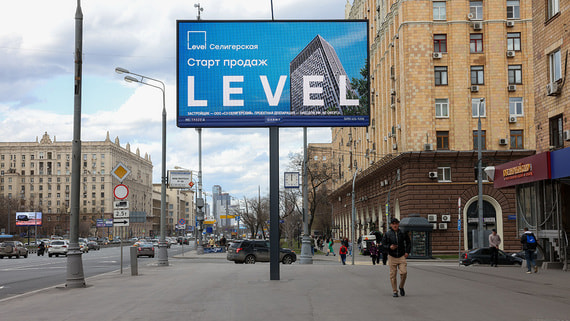
The Russian real estate market is experiencing a notable shift in marketing strategies as developers reduce their spending on traditional offline advertising for the first time since 2023. This significant change reflects the broader cooling of demand for new housing across the country, as well as a strategic reallocation of marketing budgets toward digital channels. Industry experts point to multiple factors driving this transformation, including economic pressures, changing consumer behavior, and the evolving effectiveness of various advertising platforms.
The decline in offline advertising expenditure marks a departure from the aggressive marketing campaigns that characterized the real estate sector in recent years. During the pandemic recovery period and subsequent housing boom, developers invested heavily in billboards, television commercials, print media, and outdoor advertising to capture buyer attention in an increasingly competitive market. However, the current economic climate has forced many companies to reassess their marketing strategies and seek more cost-effective alternatives.
Market Cooling and Economic Pressures
The primary driver behind reduced offline advertising spending is the significant cooling of demand for new residential properties. Rising mortgage rates, which have reached multi-year highs following the Central Bank’s monetary policy tightening, have substantially reduced the pool of potential homebuyers. The base interest rate increases implemented to combat inflation have made home loans considerably more expensive, effectively pricing many prospective buyers out of the market. This reduced demand has prompted developers to scale back their overall marketing expenditures, with offline channels bearing the brunt of these cuts.
Additionally, the expiration and modification of government-subsidized mortgage programs have further dampened market activity. These programs, which previously made homeownership accessible to a broader segment of the population, played a crucial role in sustaining demand during challenging economic periods. With reduced government support and higher borrowing costs, developers are finding fewer qualified buyers, making extensive advertising campaigns increasingly difficult to justify from a return-on-investment perspective.
Digital Migration of Advertising Budgets
Experts note that the decline in offline spending does not necessarily indicate a complete retreat from advertising but rather reflects a partial migration of budgets toward internet-based platforms. Digital advertising offers several advantages that have become increasingly attractive to cost-conscious developers. Online channels provide more precise audience targeting capabilities, allowing marketers to reach potential buyers based on demographics, search behavior, and expressed interest in real estate. This targeted approach often yields higher conversion rates compared to broad-reach traditional media.
Furthermore, digital advertising platforms offer comprehensive analytics and tracking capabilities that enable real estate companies to measure campaign effectiveness in real-time. Unlike billboards or print advertisements, where measuring direct impact remains challenging, online advertising provides detailed metrics on impressions, clicks, leads generated, and ultimate conversions. This data-driven approach allows developers to optimize their spending continuously and allocate resources to the most effective channels and messages.
Industry Outlook and Future Trends
The shift away from offline advertising represents part of a broader transformation in how real estate is marketed and sold in Russia. Virtual property tours, detailed online listings with high-quality photography and video content, and social media marketing have become essential tools in the modern developer’s arsenal. These digital assets can be created once and distributed widely at minimal marginal cost, offering significant efficiency advantages over traditional advertising methods that require ongoing investment for continued visibility.
Industry analysts suggest that this trend toward digital marketing is likely to accelerate regardless of whether housing demand recovers. Younger generations of homebuyers, who conduct extensive online research before making major purchasing decisions, have come to expect sophisticated digital experiences from property developers. Companies that fail to establish strong online presences risk losing relevance with this increasingly important demographic segment. As the real estate market continues to evolve, the balance between offline and online advertising spending may permanently shift in favor of digital channels, fundamentally altering how properties are marketed in Russia.
Expert Opinion: The current decline in offline real estate advertising signals a structural shift rather than a temporary adjustment. As digital literacy continues to grow and economic pressures persist, we can expect developers to permanently reallocate 30-40% of their traditional advertising budgets to online channels over the next two years. The companies that successfully navigate this transition by building robust digital marketing capabilities will emerge stronger when market conditions eventually improve.