

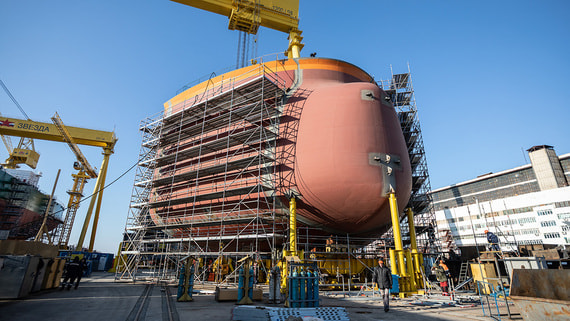
The Russian shipbuilding industry is experiencing its worst year for civilian vessel orders in over a decade, as a perfect storm of economic challenges converges on the sector. High borrowing costs, limited government support, and uncertain cargo volumes have combined to dramatically reduce demand for new commercial ships, raising serious concerns about the future of Russia’s maritime industry and its ability to maintain domestic shipping capacity.
Industry analysts report that orders for civilian vessels in 2025 have fallen to their lowest levels since 2015, marking a significant departure from the modest growth the sector had experienced in previous years. The decline comes at a particularly challenging time, as Russia has been attempting to reduce its dependence on foreign-built ships and develop its domestic shipbuilding capabilities as part of broader import substitution policies implemented since 2014.
Soaring Interest Rates Crushing Investment
The primary driver behind the collapse in orders is the prohibitively high cost of borrowed capital. Russia’s central bank has maintained elevated interest rates to combat inflation, making it extremely expensive for shipping companies to finance new vessel construction. With loans carrying double-digit interest rates, the economics of ordering new ships simply no longer make sense for many operators. A typical commercial vessel can take two to three years to construct, meaning companies must carry substantial debt burdens throughout the building process before seeing any return on their investment.
The situation is particularly acute for smaller and medium-sized shipping companies that lack the cash reserves to fund construction without significant borrowing. Even larger operators with stronger balance sheets are hesitating to commit to new orders given the uncertain economic environment. Historical data shows that Russian shipyards delivered approximately 80-100 civilian vessels annually during peak years, but current order books suggest production could fall well below these levels in the coming years.
Government Support Falls Short of Industry Needs
While the Russian government has various programs designed to support domestic shipbuilding, industry representatives argue that the available funding is insufficient to offset current market conditions. Subsidized financing programs exist but cover only a fraction of the total cost of new vessels, leaving shipping companies to bridge the gap with expensive commercial loans. The Ministry of Industry and Trade has acknowledged the challenges facing the sector, but budget constraints have limited the scope of potential intervention.
Russia’s shipbuilding industry has historically relied heavily on state orders, particularly for military vessels and icebreakers, which have helped maintain capacity at major yards. However, civilian shipbuilding has struggled to attract similar levels of support, leaving commercial operators largely at the mercy of market forces. Industry associations have called for expanded subsidies, tax incentives, and preferential lending rates to stimulate demand, but concrete measures have been slow to materialize.
Uncertain Cargo Outlook Adds to Industry Woes
Compounding the financial challenges is growing uncertainty about future cargo volumes that would justify new vessel construction. International sanctions, shifting trade patterns, and global economic volatility have made it difficult for shipping companies to project demand with confidence. Without clarity on what goods will need to be transported and along which routes, operators are reluctant to commit billions of rubles to new ships that may not be fully utilized.
The situation represents a significant setback for Russia’s ambitions to develop a modern, domestically-built merchant fleet. Industry experts warn that prolonged underinvestment in new vessels could lead to an aging fleet, higher maintenance costs, and reduced competitiveness in regional shipping markets. Some analysts suggest that without substantial policy intervention, Russia may become increasingly dependent on foreign shipping services, ironically undermining the very import substitution goals that motivated earlier investments in domestic shipbuilding capacity.
Expert Opinion: The current crisis in Russian civilian shipbuilding reflects deeper structural challenges that will likely persist beyond any short-term economic recovery. Without a coordinated approach combining substantial interest rate relief, expanded government guarantees, and long-term cargo commitments, the industry faces continued contraction through at least 2027. The real risk is that skilled workers and technical expertise will migrate to other sectors, making future recovery even more difficult and costly.