

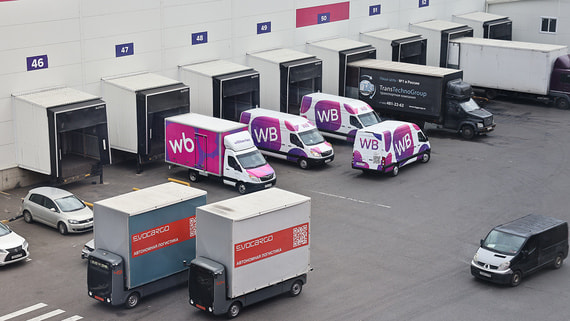
Russian e-commerce giant Wildberries has been significantly expanding its warehouse infrastructure in Kazakhstan, a strategic move that comes at a particularly interesting time. The Russian Foreign Ministry has recently made statements about the “integration” of marketplace platforms with neighboring countries, remarks that have gained additional context given ongoing military operations and Ukrainian armed forces attacks on Russian territory. This expansion represents not just a business opportunity but potentially a crucial logistical adaptation for one of Russia’s largest online retailers.
Wildberries, founded in 2004 by Tatyana Bakalchuk, has grown to become the largest e-commerce platform in Russia and one of the biggest in the Commonwealth of Independent States (CIS) region. The company operates across multiple countries including Belarus, Armenia, Kyrgyzstan, and Kazakhstan, handling millions of orders daily. The decision to invest heavily in Kazakh warehouse infrastructure reflects both commercial ambitions and practical necessities in an evolving regional landscape.
Strategic Importance of Kazakhstan for Russian Business
Kazakhstan has emerged as a crucial partner for Russian businesses seeking to maintain international connectivity and supply chain resilience. Since 2022, the Central Asian nation has become increasingly important as a transit hub and alternative logistics route for Russian companies facing Western sanctions. The country shares a 7,600-kilometer border with Russia, the longest continuous land border in the world, making it an ideal location for distribution centers serving both markets.
The Eurasian Economic Union (EAEU), which includes both Russia and Kazakhstan, provides a framework for relatively seamless cross-border commerce. This economic bloc, established in 2015, eliminates customs barriers between member states and harmonizes trade regulations. For Wildberries, operating warehouses in Kazakhstan means access to a market of nearly 20 million consumers while also creating redundancy in its logistics network that could prove valuable if Russian infrastructure faces disruptions.
E-Commerce Growth and Regional Market Dynamics
The e-commerce sector in Central Asia has experienced remarkable growth in recent years, with Kazakhstan leading the region in digital retail adoption. According to industry analysts, Kazakhstan’s e-commerce market has been growing at approximately 30-40% annually, driven by increasing internet penetration, smartphone usage, and changing consumer habits accelerated by the global pandemic. Wildberries has been positioning itself to capture a significant share of this expanding market, competing with local players and other Russian platforms like Ozon.
Building local warehouse capacity allows Wildberries to offer faster delivery times to Kazakh customers, a critical competitive advantage in e-commerce. Previously, many orders had to be shipped directly from Russian fulfillment centers, resulting in longer wait times. By establishing substantial warehousing operations within Kazakhstan, the company can stock popular items locally and reduce delivery windows from days to hours in major cities like Almaty, Astana, and Shymkent.
Geopolitical Considerations and Business Continuity
The timing of this warehouse expansion carries additional significance given current geopolitical circumstances. With Ukrainian forces conducting cross-border operations and drone attacks reaching deep into Russian territory, including strikes on logistics facilities, having distributed infrastructure across multiple countries provides a measure of operational security. While Wildberries has not publicly linked its Kazakhstan expansion to security concerns, business continuity planning has become increasingly important for major Russian corporations.
The Russian Foreign Ministry’s references to marketplace “integration” with neighboring states suggest governmental awareness and possible encouragement of such strategies. Economic integration within the EAEU framework has long been a policy priority for Moscow, and the current situation may be accelerating these trends. For Kazakhstan, hosting Russian business operations brings investment and employment while requiring careful diplomatic balancing, as the country seeks to maintain good relations with both Russia and Western partners.
Industry experts note that Wildberries’ expansion strategy reflects a broader trend of Russian companies developing alternative logistics corridors and diversifying their geographic footprint. This approach serves multiple purposes: capturing growth in emerging markets, reducing dependence on any single country’s infrastructure, and creating flexibility to adapt to rapidly changing circumstances. As the largest private employer in Russian e-commerce with over 100,000 workers, Wildberries’ strategic decisions have significant implications for the entire sector.
Expert Opinion: The Wildberries expansion into Kazakhstan represents a calculated hedge against both market opportunity and geopolitical risk. As supply chain resilience becomes paramount for Russian businesses, we can expect more companies to follow this model of distributed regional infrastructure. The real question is whether Kazakhstan can maintain its balancing act as a business hub without becoming entangled in broader East-West tensions, which will ultimately determine the sustainability of such arrangements.