

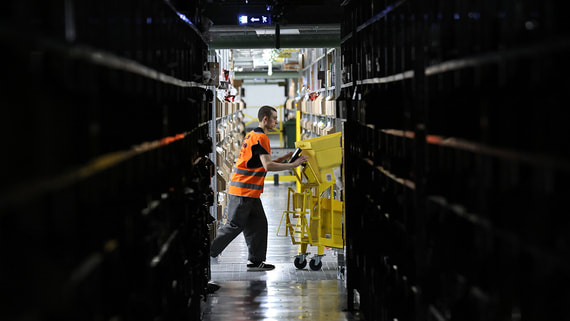
Russia’s largest online marketplace Wildberries is facing potentially catastrophic financial losses following attacks on two of its major logistics facilities. The warehouses located in Elektrostal, Moscow Region, and Kotovsk, Tambov Region, have been forced to cease operations, with all merchandise removed from sale. Preliminary estimates suggest the damage could reach tens of billions of rubles, marking one of the most significant disruptions in Russian e-commerce history.
The shutdown of these two critical distribution centers has sent shockwaves through the Russian online retail sector. Wildberries, which handles millions of orders daily and serves as a primary sales channel for thousands of small and medium-sized businesses, now faces the enormous challenge of redirecting logistics flows and compensating affected sellers. The company has not yet released official statements regarding the timeline for resuming operations or the exact scope of merchandise affected by the incident.
Impact on Russian E-Commerce Infrastructure
The attack on Wildberries’ facilities highlights the vulnerability of centralized logistics networks that form the backbone of modern e-commerce. Wildberries operates one of the most extensive warehouse networks in Russia, with facilities strategically positioned across the country to ensure rapid delivery times. The Elektrostal warehouse, located approximately 50 kilometers east of Moscow, serves as a crucial hub for the capital region, processing hundreds of thousands of items daily. The Kotovsk facility in Tambov Region plays a similarly vital role in serving central Russia and southern regions.
Industry analysts estimate that the combined storage capacity of these two facilities could exceed several hundred thousand square meters, housing merchandise worth billions of rubles. The decision to remove all goods from sale suggests either significant physical damage to inventory or contamination concerns that prevent safe handling and shipping. For the thousands of sellers who rely on Wildberries’ fulfillment services, this disruption could mean weeks or even months of lost revenue, with smaller businesses potentially facing existential threats to their operations.
Historical Context and Market Implications
Wildberries has grown from a modest online clothing retailer founded in 2004 into Russia’s dominant e-commerce platform, valued at several billion dollars and employing tens of thousands of workers across its logistics network. The company’s marketplace model has transformed Russian retail, enabling entrepreneurs across the country to reach customers without the traditional barriers of physical store presence. This incident represents the most significant operational disruption in the company’s two-decade history and raises serious questions about security protocols at major logistics facilities.
The Russian e-commerce market has experienced explosive growth in recent years, with online sales accounting for an increasingly significant share of total retail turnover. This expansion has been accompanied by massive investments in warehouse infrastructure, delivery networks, and fulfillment technology. However, the concentration of goods in large centralized facilities creates inherent risks, as demonstrated by this incident. Industry experts have long warned about the need for greater redundancy and security measures in e-commerce logistics, though the specific nature of the attacks on Wildberries’ facilities remains under investigation.
Seller Community and Consumer Response
The immediate aftermath of the warehouse shutdown has created significant uncertainty among Wildberries’ vast community of sellers. Many merchants have reported that their entire inventory has been frozen, with no clear timeline for resolution. Social media platforms have seen an outpouring of concern from business owners who depend entirely on the marketplace for their livelihood. Some sellers have begun exploring alternative platforms, though Wildberries’ dominant market position means that competitors may struggle to absorb the sudden influx of displaced merchants.
Consumer impact is also expected to be substantial, with delivery delays affecting orders already placed and many products becoming temporarily unavailable. The timing of the disruption is particularly challenging, as businesses had been preparing for seasonal sales and promotional events. The full economic ripple effects will likely extend far beyond Wildberries itself, affecting suppliers, logistics partners, and the broader retail ecosystem that has developed around the platform’s infrastructure.
Expert Opinion: This incident underscores the critical need for e-commerce platforms to diversify their logistics infrastructure and implement robust security measures at all major facilities. As online retail continues to grow, the concentration of billions of rubles worth of merchandise in single locations creates systemic risks that can cascade through entire supply chains. Moving forward, we expect to see increased investment in distributed fulfillment networks and enhanced physical security protocols across the Russian e-commerce sector.