The Dropped Third Strike Rule Explained
When a batter can run on strike three, what "not caught" means, how the play is scored, and the famous postseason moments the rule has decided.
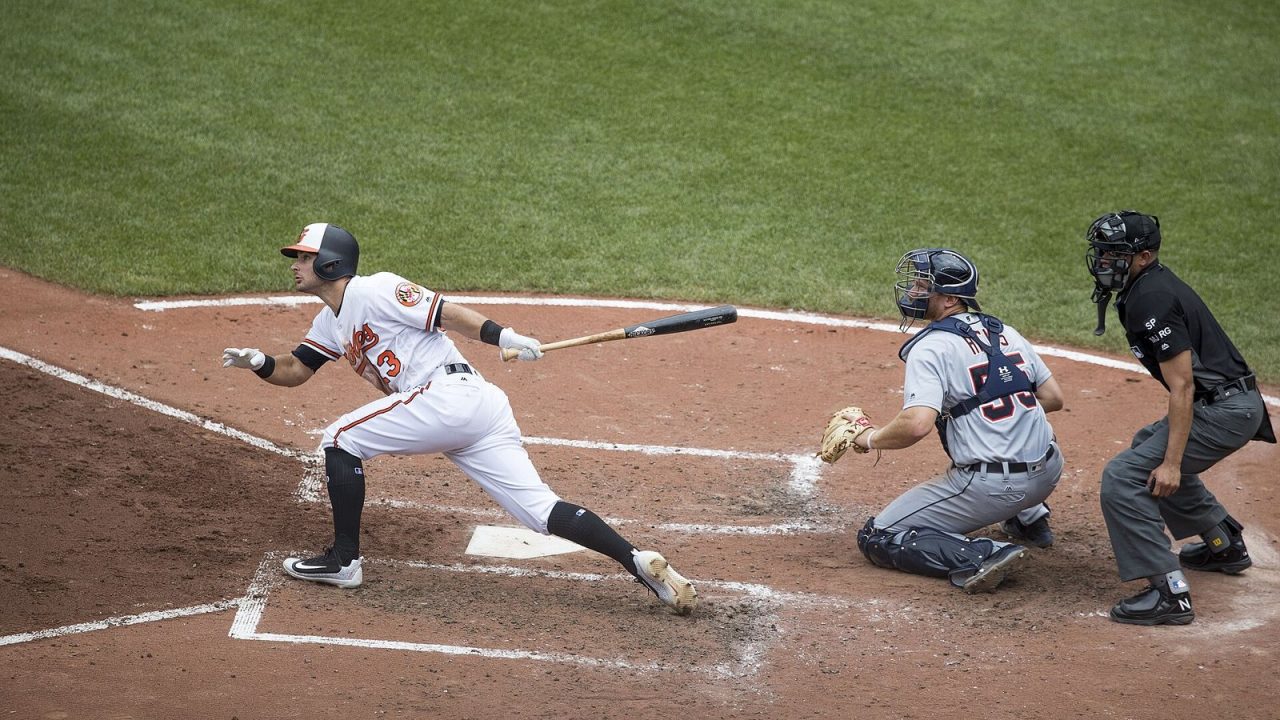
Strike three usually ends a plate appearance. The batter walks back to the dugout, the pitcher gets a strikeout, and everyone moves on. But every so often, the catcher fails to hold the pitch, the batter sprints toward first base, and a play that seemed finished suddenly is not. This is the dropped third strike, known in the rulebook as the uncaught third strike, and it has decided postseason games.
The rule is short, but it confuses fans because it depends on the base situation, the number of outs and a split-second judgment about whether the ball was caught. Here is how it works.
The Basic Rule
A batter who strikes out normally is out on the spot. The uncaught third strike rule creates an exception. If the catcher does not legally catch the third strike, the batter becomes a runner and can try to reach first base, but only when one of two conditions is met:
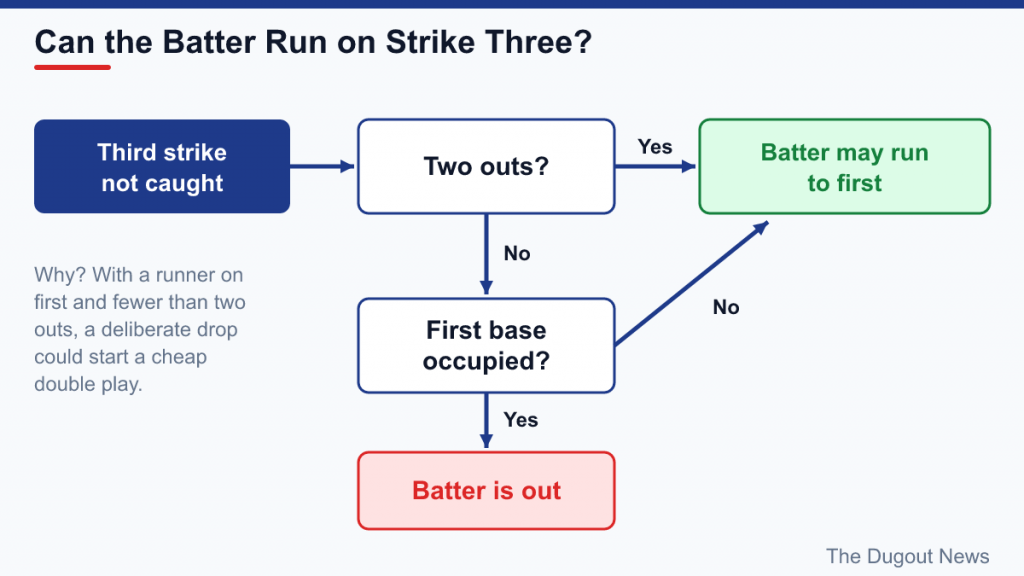
- First base is unoccupied, or
- There are two outs, whether or not first base is occupied.
The Official Baseball Rules cover this in Rule 5.05, which lists the ways a batter becomes a runner, and Rule 5.09, which covers how a batter is put out. In practical terms:
- With fewer than two outs and a runner on first, a batter is out on strike three even if the catcher drops it.
- With the bases empty, or with runners only on second and/or third, the batter can run on a dropped strike three regardless of outs.
- With two outs, the batter can always run on a dropped strike three, even with the bases loaded.
Why first base matters
The exception for a runner on first with fewer than two outs exists to prevent an unfair trick. Without it, a catcher could deliberately drop strike three with a runner on first, forcing that runner to advance, and then start an easy double play. The same logic underlies the infield fly rule: the rulebook takes away a defensive option that would let fielders turn a routine play into multiple outs by failing to catch the ball on purpose. With two outs, the trick no longer matters, because a single out ends the inning anyway, so the batter is allowed to run.
What “Not Caught” Means
The key word is “caught.” Under the rules, a catch requires the catcher to secure the pitch in his hand or glove before it touches the ground. Several situations count as an uncaught third strike:
- The catcher drops the ball or it pops out of his mitt.
- The pitch bounces first. A swinging strike three on a pitch in the dirt is uncaught, even if the catcher smothers it cleanly after the bounce. This is the most common version of the play, especially on sliders and splitters that dive below the zone.
- The ball gets past the catcher entirely, as a wild pitch or passed ball.
A foul tip is a different matter. A foul tip that goes sharp and direct to the catcher’s hand or glove and is legally caught counts as a strike, and if it is strike three, the batter is out. If the catcher does not catch it, it is simply a foul ball.
The umpire’s signal
Because the batter may not know whether the ball was caught, umpires typically signal the strike and, if the pitch was not caught, may indicate “no catch.” The umpire does not call the batter out. It is up to the batter to recognize the situation and run, and up to the defense to finish the play.
How the Defense Records the Out
Once the batter becomes a runner, the defense has to retire him like any other runner going to first. The usual options are:
- Tag the batter-runner before he reaches first. Catchers often do this when the ball lands right in front of them and the batter hesitates.
- Throw to first base. Because first base was open (or there were two outs), the batter is forced to first, so the defense only needs to touch the base with the ball before he arrives.
- Force out another runner. With two outs and runners on base, all runners are forced if they are behind the batter. With the bases loaded and two outs, the catcher can simply step on home plate for a force out to end the inning.
The dirt circle rule
Batters sometimes do not realize the ball was not caught and start walking toward the dugout. Before 2006, a batter could still try for first until he actually entered the dugout. A comment added to the rules after the 2005 postseason now says that a batter who does not realize his situation and is not attempting to go to first is declared out once he leaves the dirt circle surrounding home plate.
How the Play Is Scored
Scoring a dropped third strike trips up even experienced scorekeepers. The key rule: the pitcher is always credited with a strikeout and the batter is always charged with one, regardless of what happens next.
What happens next determines the rest of the scoring:
| Outcome | How it is scored |
|---|---|
| Catcher tags batter or throws him out | Strikeout, with the putout credited to the fielder who made it (for example, K 2-3 if the catcher throws to first) |
| Batter reaches because the pitch was in the dirt or wild | Strikeout plus wild pitch |
| Batter reaches because the catcher should have caught it | Strikeout plus passed ball |
| Batter reaches because of a bad throw or dropped throw | Strikeout plus error on the fielder |
| Defense retires another runner instead | Strikeout plus fielder’s choice |
The batter who reaches base this way is not credited with a hit, and his plate appearance still counts as an at-bat that ended in a strikeout. In your scorebook, you note the K and then the reason he reached, such as K-WP or K-PB. Our guide to keeping score at a baseball game walks through these symbols.
Four strikeouts in one inning
Because the strikeout is recorded even when the batter reaches base, a pitcher can strike out more than three batters in a single inning. Four-strikeout innings have happened many times in MLB history. No pitcher has recorded five strikeouts in an inning in the majors.
Famous Dropped Third Strikes
Mickey Owen, 1941 World Series
The most famous dropped third strike came in Game 4 of the 1941 World Series at Ebbets Field on October 5, 1941. The Brooklyn Dodgers led the New York Yankees 4–3 with two outs and nobody on in the ninth inning. Reliever Hugh Casey struck out Tommy Henrich on a full-count pitch, which should have ended the game and tied the series. But catcher Mickey Owen could not hold the ball, and Henrich reached first.
The Yankees took full advantage. Joe DiMaggio singled, Charlie Keller doubled home two runs, Bill Dickey walked, and Joe Gordon doubled in two more. New York won 7–4 and clinched the championship the next day in Game 5. Owen later accepted the blame, calling the play his error, though in scoring terms the play was recorded as a passed ball rather than a fielding error.
A.J. Pierzynski, 2005 ALCS
In Game 2 of the 2005 American League Championship Series, on October 12, 2005, the Chicago White Sox and Los Angeles Angels were tied 1–1 in the bottom of the ninth. Angels pitcher Kelvim Escobar struck out A.J. Pierzynski for what looked like the inning’s final out. Angels catcher Josh Paul rolled the ball back toward the mound, believing the inning was over.
Home plate umpire Doug Eddings ruled that the ball had touched the dirt before Paul caught it, making it an uncaught third strike. Pierzynski ran to first and was ruled safe. Pinch-runner Pablo Ozuna stole second, and Joe Crede drove him in with a hit for a 2–1 White Sox win. Chicago went on to win the series 4–1 and swept the Houston Astros in the World Series.
The play led directly to the dirt circle comment added in 2006, although that change would not have altered the outcome, since Pierzynski did run toward first.
A milestone strikeout that did not end the at-bat
On September 28, 2019, Justin Verlander recorded his 3,000th career strikeout against Kole Calhoun on a pitch that got away, and Calhoun reached base and later scored. The strikeout counted for the milestone all the same.
Common Mistakes and Misconceptions
- “The batter can always run if the catcher drops strike three.” Not with a runner on first and fewer than two outs.
- “If the catcher blocks a pitch in the dirt cleanly, it’s a catch.” No. Any pitch that touches the ground before being secured is not caught.
- “Reaching base on a dropped third strike counts as a hit.” It does not. It is a strikeout plus a wild pitch, passed ball, error or fielder’s choice.
- “The umpire will tell the batter to run.” The umpire may signal no catch, but the batter is responsible for recognizing the play.
- “The catcher can step on home plate to get the batter out.” Only if there is a force at home, such as bases loaded with two outs. Otherwise he must tag the batter or throw to first.
Where the Rule Came From
The uncaught third strike is one of baseball’s oldest rules. It appeared in the Knickerbocker Rules of 1845. In the early game, catchers stood well back from the plate, so a third missed pitch was effectively a ball in play that the defense had to field. As catchers moved closer and wore protective gear, nearly every third strike was caught cleanly, and the rule became a rare exception. It survives because a third strike is still technically a live ball until the catch is completed.
Youth and Amateur Variations
Not every league applies the rule the same way. Little League’s Tee-Ball and Minor League divisions treat the batter as out on strike three regardless of whether the ball is caught, which keeps games moving for young players whose catchers are still learning. Older Little League divisions and many other youth organizations allow the batter to run. If you coach or umpire youth baseball, check your league’s rulebook before the season.
Quick Recap
A batter can run on strike three when the catcher does not catch the pitch cleanly, but only if first base is open or there are two outs. The pitcher gets a strikeout either way, and the batter’s arrival at first is explained in the scorebook by a wild pitch, passed ball, error or fielder’s choice. If you are new to the basics of outs, counts and force plays, start with our guide to baseball rules for beginners.