Baseball Glossary: Essential Terms Every Fan Should Know
From ace and can of corn to walk-off and the Mendoza Line: a plain-English glossary of the baseball terms you will hear on every broadcast.
Baseball has its own language. Broadcasters talk about a “can of corn,” a “Texas Leaguer” or a “golden sombrero” as if everyone was born knowing them, and box scores are full of abbreviations that look like code. Some of these terms are official, defined in the rulebook or the scoring rules. Others are slang that has been around for generations. Both kinds matter if you want to follow a game comfortably.
This glossary groups the most useful terms by area of the game, with short, accurate definitions. Within each group the terms are listed alphabetically. If you are completely new to the sport, start with our guide to baseball rules for beginners, then come back here to fill in the vocabulary.
Pitching Terms
- Ace: A team’s best starting pitcher, usually the first name in the rotation and the one trusted with the biggest games.
- Battery: The pitcher and catcher considered together. “Tonight’s battery” means the starting pitcher and the catcher working with him.
- Brushback / chin music: A pitch thrown high and tight to push a batter off the plate. “Chin music” is the slang version, referring to a pitch that passes near the batter’s face. Intentionally throwing at a batter is against the rules and can lead to ejections.
- Bullpen: Both the area where relief pitchers warm up and the group of relievers themselves. “The bullpen blew the lead” refers to the relievers.
- Changeup: An offspeed pitch designed to look like a fastball out of the hand but arrive noticeably slower, disrupting the batter’s timing.
- Closer: The relief pitcher a team uses to get the final outs of a close win, typically in the ninth inning.
- Hold: An unofficial statistic for a reliever who enters in a save situation, keeps the lead and leaves without finishing the game. MLB does not count it as an official stat, but it is widely tracked.
- Meatball: An easy pitch to hit, usually a fastball over the middle of the plate.
- Painting the corners: Throwing pitches precisely to the edges of the strike zone, where they are hard to hit squarely.
- Quality start: A start in which the pitcher works at least six innings and allows no more than three earned runs. Sportswriter John Lowe created the statistic in 1985.
- Save: An official statistic credited to the pitcher who finishes a win without being the winning pitcher, records at least one out, and meets one of three conditions: he entered with a lead of three runs or fewer and pitched at least an inning, he entered with the tying run on base, at bat or on deck, or he pitched at least three innings. The save became an official statistic in 1969.
- Setup man: A reliever who usually pitches the inning or innings before the closer, often the eighth.
- Southpaw: A left-handed pitcher.
- Uncle Charlie: Old slang for a curveball, especially a big, looping one.
For a deeper look at the pitches themselves, see our guide to fastballs, breaking balls and offspeed pitches.
Hitting Terms
- Baltimore chop: A ball hit hard into the ground near home plate that bounces so high the batter reaches first before anyone can make a play.
- Bloop / blooper: A weakly hit fly ball that drops in between the infielders and outfielders for a hit.
- Can of corn: An easy, lazy fly ball to an outfielder. The phrase has been around for well over a century, and its exact origin is debated.
- Cleanup hitter: The fourth batter in the lineup, traditionally a power hitter whose job is to “clean up” the bases by driving in runners.
- Cycle: Hitting a single, double, triple and home run in the same game. A “natural cycle” means getting them in that order. MLB has seen fewer than 400 cycles in its long history, making it roughly as uncommon as a no-hitter.
- Dinger / tater / moonshot: All slang for a home run. A moonshot is a particularly high one.
- Five-tool player: A position player who excels at all five classic skills: hitting for average, hitting for power, running, throwing and fielding.
- Frozen rope: A hard, low line drive that seems to travel in a straight line.
- Golden sombrero: Striking out four times in one game. Three strikeouts is sometimes called a “hat trick,” and five earns the unflattering “platinum sombrero.”
- Grand slam: A home run with the bases loaded, worth four runs.
- Mendoza Line: A .200 batting average, used as the threshold of poor hitting. It is named for Mario Mendoza, a slick-fielding shortstop of the 1970s and early 1980s who hit below .200 in several seasons.
- Punch out: A strikeout, often used when the umpire makes an emphatic gesture on a called third strike.
- Seeing-eye single: A ground ball that just sneaks between two infielders for a hit, as if it could see the gap.
- Texas Leaguer: A soft fly ball that falls in between the infield and outfield for a hit, similar to a bloop.
- Walk-off: A hit, walk or other play that ends the game in the bottom of the final inning by scoring the winning run. The home team “walks off” the field as winners. A walk-off home run is the most dramatic version.
Fielding and Defensive Terms
- Around the horn: After an out with no one on base, infielders toss the ball around the diamond before returning it to the pitcher. The phrase also describes a 5-4-3 double play, which travels from third to second to first.
- Bang-bang play: A very close play, usually at first base, where the ball and runner arrive at nearly the same moment.
- Hot corner: Third base, so called because hard-hit balls reach the third baseman very quickly.
- Middle infielders: The shortstop and second baseman, the two players who cover second base and turn most double plays.
- Shift: Moving fielders away from their standard spots to match a hitter’s tendencies. MLB has limited infield shifts since 2023.
- Tools of ignorance: A catcher’s protective gear: mask, chest protector and shin guards. The joke is that only someone unwise would choose a position that requires so much armor.
- Twin killing: A double play.
- Utility player: A player who can competently handle several positions, valuable for filling gaps when regulars rest or get hurt.
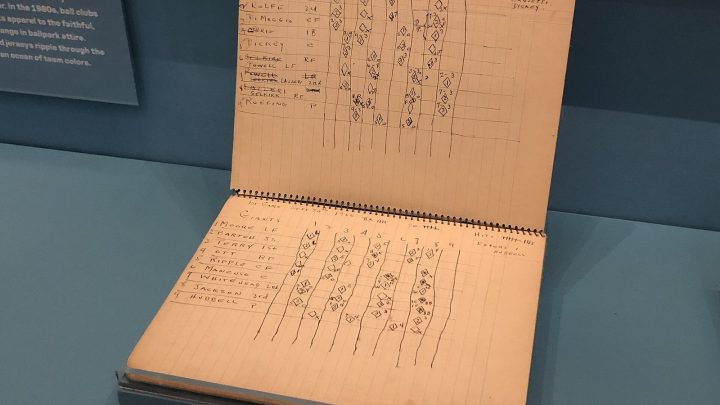
The scoring numbers fielders use (6-4-3 and so on) are explained in our guide to keeping score with a paper scorecard.
Baserunning and Game Situation Terms
- Ducks on the pond: Runners in scoring position, especially with the bases loaded.
- Hit-and-run: A play in which the runner breaks for the next base with the pitch and the batter is expected to swing and put the ball in play, ideally through a hole the moving fielders leave open.
- In a pickle: Caught in a rundown between two bases, with fielders throwing the ball back and forth as they close in.
- RISP: Runners in scoring position, meaning runners on second or third base. A team’s batting average “with RISP” shows how it hit in those spots.
- Small ball: An offensive style built on walks, singles, bunts, stolen bases and moving runners up one base at a time rather than waiting for home runs. “Manufacturing runs” means much the same thing.
- Squeeze play: A bunt with a runner on third, designed to bring him home. In a suicide squeeze the runner breaks with the pitch; in a safety squeeze he waits to see the bunt on the ground.
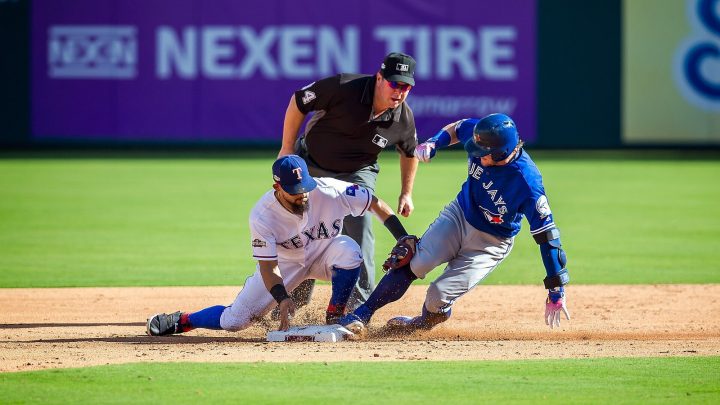
- Stolen base: A runner advancing to the next base without the help of a hit, walk, error or wild pitch, typically by running as the pitcher delivers.
Schedule, Roster and Career Terms
- Cup of coffee: A brief stint in the major leagues, usually by a minor leaguer who is called up and sent back down quickly, or who never returns.
- Doubleheader: Two games between the same teams on the same day. The second game is sometimes called the “nightcap.”
- Fall Classic: A nickname for the World Series.
- Rubber game: The deciding game of a series when the teams have split the earlier games, such as the third game of a three-game set tied at one win each.
- Rookie: A first-year player. For awards and official purposes, MLB uses playing-time limits to decide who still qualifies as a rookie.
- Sophomore slump: A decline in performance in a player’s second season, often after a strong rookie year.
Common Abbreviations You Will See
Broadcast graphics and box scores lean heavily on short forms. These are the ones that appear most often:
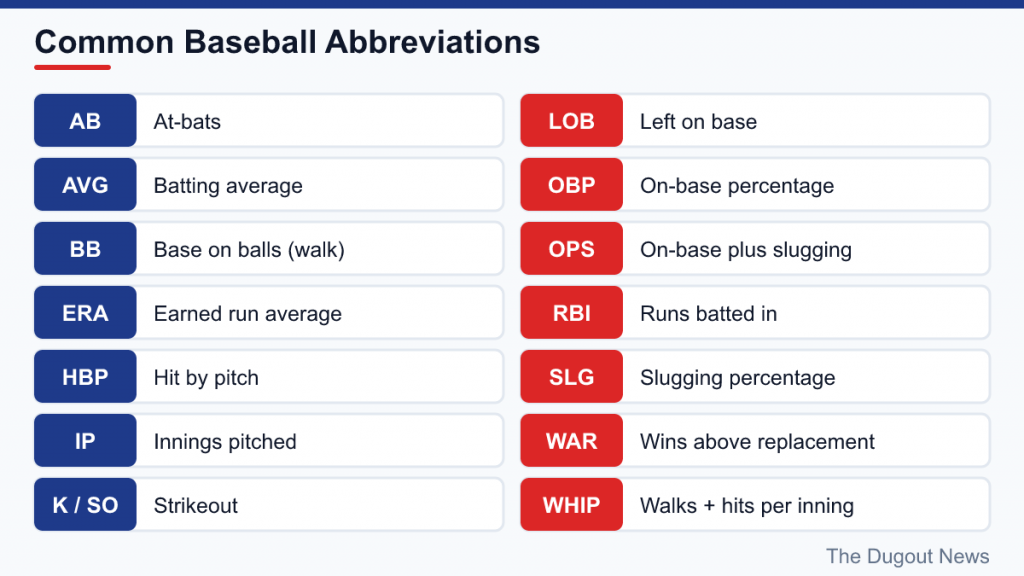
| Abbreviation | Meaning |
|---|---|
| AB | At-bats (plate appearances minus walks, hit-by-pitches, sacrifices and catcher’s interference) |
| AVG | Batting average (hits divided by at-bats) |
| BB | Base on balls (walk) |
| ERA | Earned run average (earned runs allowed per nine innings) |
| HBP | Hit by pitch |
| IP | Innings pitched |
| K / SO | Strikeout |
| LOB | Runners left on base |
| OBP | On-base percentage |
| OPS | On-base plus slugging |
| RBI | Runs batted in |
| SLG | Slugging percentage (total bases divided by at-bats) |
| WAR | Wins above replacement |
| WHIP | Walks plus hits per inning pitched |
Terms People Often Get Wrong
A few words are used loosely enough that they cause confusion, even among longtime fans.
Error vs. mistake
An error is an official scoring decision: the official scorer charges a fielder with an error when a misplay that should have been made with ordinary effort allows a batter or runner to reach or advance. A poorly located pitch, a bad baserunning decision or a fielder playing out of position are mistakes, but they are not errors in the scorebook.
Plate appearance vs. at-bat
Every trip to the plate that ends is a plate appearance. An at-bat is a narrower count that leaves out walks, hit-by-pitches, sacrifice bunts, sacrifice flies and catcher’s interference. That is why a player can go “0-for-2 with two walks”: four plate appearances, two at-bats, no hits.
Earned vs. unearned run
An earned run is one the pitcher is held responsible for. Runs that score because of errors or passed balls, which would not have scored with clean defense, are unearned and do not count against the pitcher’s ERA.
Walk-off vs. come-from-behind win
A walk-off can only happen to the home team, because only the home team can end a game by scoring in the bottom of the final inning. A visiting team can rally late and win, but the game ends on the defensive side, so it is not a walk-off.
Save vs. hold
Both reward relievers who protect a lead in a close game, but only the pitcher who finishes the game can get the save. A setup man who hands a lead to the closer gets a hold at most, and holds are tracked unofficially.
Frequently Asked Questions
Where does baseball slang come from?
Much of it comes from players, sportswriters and broadcasters over more than a century of daily games. Some terms honor specific players (the Mendoza Line), some describe a look or feel (frozen rope, can of corn), and some started as newspaper jokes that stuck. Origins for many phrases are uncertain, so be cautious about any single story that claims to explain them.
What is the fastest way to learn the vocabulary?
Listen to radio broadcasts. Radio announcers have to describe every play in words, so you hear the terminology in context dozens of times per game. Keeping score while you listen speeds things up even more.